
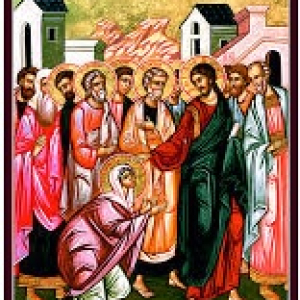
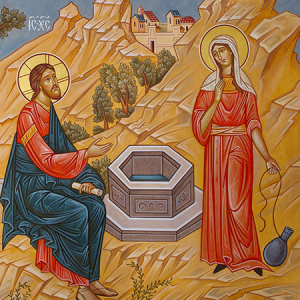
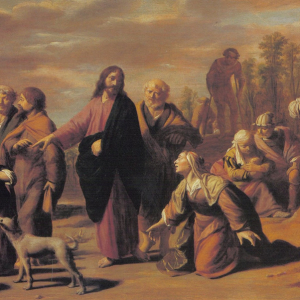
John 3:1-2 Now there was a man of the Pharisees, named Nicodemus, a ruler of the Jews; this man came to Jesus by night and said to Him, ‘Rabbi, we know that You have come from God as a teacher; for no one can do these signs that You do unless God is with him’”. Jesus replied, “Very truly I tell you, no one can see the kingdom of God unless they are born again.” “How can someone be born when they are old?” Nicodemus asked. “Surely they cannot enter a second time into their mother’s womb to be born!” Jesus answered, “Very truly I tell you, no one can enter the kingdom of God unless they are born of water and the Spirit. Flesh gives birth to flesh, but the Spirit gives birth to spirit. You should not be surprised at my saying, ‘You must be born again.’ The wind blows wherever it pleases. You hear its sound, but you cannot tell where it comes from or where it is going. So it is with everyone born of the Spirit.” “How can this be?” Nicodemus asked. “You are Israel’s teacher,” said Jesus, “and do you not understand these things? Very truly I tell you, we speak of what we know, and we testify to what we have seen, but still you people do not accept our testimony. I have spoken to you of earthly things and you do not believe; how then will you believe if I speak of heavenly things? No one has ever gone into heaven except the one who came from heaven—the Son of Man. Just as Moses lifted up the snake in the wilderness, so the Son of Man must be lifted up, that everyone who believes may have eternal life in him.”
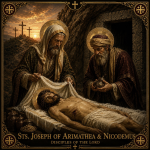
John 19:38-40 Later, Joseph of Arimathea asked Pilate for the body of Jesus. Now Joseph was a disciple of Jesus, but secretly because he feared the Jewish leaders. With Pilate’s permission, he came and took the body away. He was accompanied by Nicodemus, the man who earlier had visited Jesus at night. Nicodemus brought a mixture of myrrh and aloes, about seventy-five pounds. Taking Jesus’ body, the two of them wrapped it, with the spices, in strips of linen. This was in accordance with Jewish burial customs.
Mark 15:43 “Joseph of Arimathea came, a prominent member of the Council, who himself was waiting for the kingdom of God; and he gathered up courage and went in before Pilate, and asked for the body of Jesus”
Matt 27:57 “there came a rich man from Arimathea, named Joseph, who himself had also become a disciple of Jesus”
Nicodemus, a Pharisee who questioned Jesus after witnessing miracles, and Joseph of Arimathea, a wealthy council member, took the body of Jesus down from the cross and prepared it for a hurried burial before the Sabbath; Scripture says nothing further. Nonbiblical sources like the Gospel of Nicodemus claim Nicodemus lost his status, was expelled from the Sanhedrin and Jerusalem, and was baptized by Peter and John—claims lacking proof. Tradition says he found refuge with Gamaliel and was buried with him and Stephen, though this is uncertain.
Joseph was actually a part of the Sanhedrin—the group of Jewish religious leaders who called for the crucifixion of Jesus. However, Joseph was opposed to the Council’s decision and was in fact a secret follower of Jesus. Joseph was wealthy as well as a good and upright man. Many spurious stories and legends have arisen regarding Joseph. Some purport that he was the uncle of Jesus’ mother, Mary. However, the Bible makes no such connection, so the claim is unsubstantiated. In addition, Joseph supposedly made many trips to Britain for trade in Cornish tin and is said to have eventually brought the gospel to that country, having been sent with other disciples by St. Phillip. He may have been responsible for the building of the first Christian Church in England, and some say the first dedicated Christian Church building in history. One of the abiding legends of early English Christianity is that Joseph of Arimathea visited the West Country of England with the teenage Jesus on one of his trading trips. Both Somerset and Cornwall claim to have been visited by Joseph and Jesus.
But far better known is this poem by William Blake, based on the same legend, and famously set to music by Sir Hubert Parry as 'Jerusalem':
And did those feet in ancient time
Walk upon England's mountains green?
And was the holy Lamb of God
On England's pleasant pastures seen?
And did the countenance divine
Shine forth upon our clouded hills?
And was Jerusalem builded here
Among those dark satanic mills?
Bring me my bow of burning gold!
Bring me my arrows of desire!
Bring me my spear! O clouds, unfold!
Bring me my chariot of fire!
I will not cease from mental fight,
Nor shall my sword sleep in my hand,
Till we have builded up Jerusalem
In England's green and pleasant land.
William Blake (1757-1827)
The Legend of The Glastonbury Thorn: The Glastonbury Thorn (Crataegus monogyna 'Biflora') is a variety of hawthorn that flowers twice a year in winter and spring - or, given suitable conditions, at Christmas and Easter. The legend states that after landing in England, carrying a pilgrim’s staff made of hawthorn, Joseph of Arimathea made his way to Glastonbury. When he stuck his pilgrim's staff in the ground at Wearyall Hill it turned into a flowering thorn tree overnight. The Glastonbury Thorn is said to flower on Christmas Day every year, and blossom from the plant in the churchyard of St John's Church Glastonbury is said to be used to decorate the Christmas breakfast table of the Queen each year.
In time Joseph converted thousands to Christianity, including, it is said, 18,000 in a single day at the town of Wells. He also converted Ethelbert, the local king. Joseph went on to found Glastonbury Abbey. He became so well-known and admired that when he died at the age of 86, his body was carried by six kings in the funeral procession.
Troparion (special melody) The noble Joseph, when he had taken down Thy most pure body from the tree, wrapped it in fine linen, and anointed it with spices, and placed it in a new tomb.