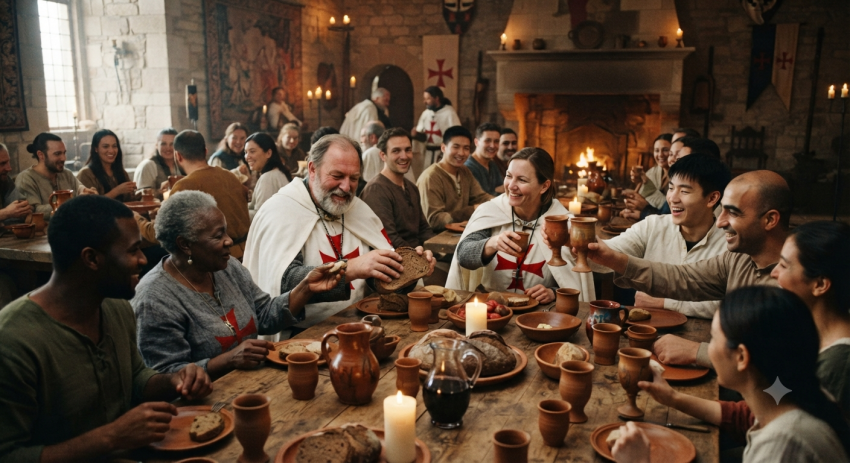
To help bridge the severe political rifts in America, modern chivalric and charitable bodies identifying with the Knights Templar tradition can lead by example through non-partisan community service, active ecumenical dialogue, and the strict rejection of ideological polarization. Rather than allowing sacred symbols to be weaponized for electoral or partisan divisions, these modern orders can focus their efforts on localized humanitarian outreach, disaster relief, and defending the vulnerable—ac... moreTo help bridge the severe political rifts in America, modern chivalric and charitable bodies identifying with the Knights Templar tradition can lead by example through non-partisan community service, active ecumenical dialogue, and the strict rejection of ideological polarization. Rather than allowing sacred symbols to be weaponized for electoral or partisan divisions, these modern orders can focus their efforts on localized humanitarian outreach, disaster relief, and defending the vulnerable—actions that transcend factional boundaries. By fostering spaces where individuals from diverse political backgrounds can unite under shared values of charity, humility, and civic stewardship, they can serve as a steadying, unifying anchor within fractured communities.
Guiding this mission of reconciliation, scripture reminds believers of the vital importance of pursuing peace and mutual understanding over strife. As written in Romans 12:18, "If it is possible, as far as it depends on your lives, live at peace with everyone," urging a deliberate retreat from hostility. Furthermore, the call to mend societal fractures is echoed in Colossians 3:13, which commands individuals to "Bear with each other and forgive one another if any of you has a grievance against someone; forgive as the Lord forgave you."