Like a Templar examining the record, let’s separate what history can show from what faith asks us to believe.
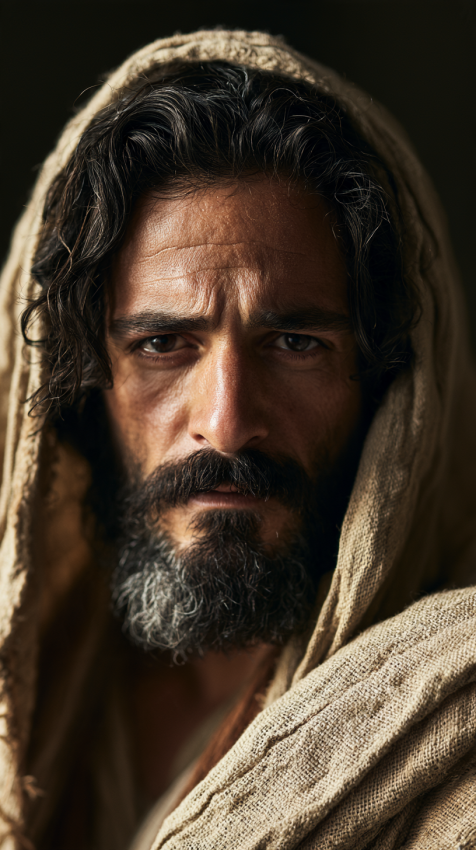
Roman historian Tacitus wrote that “Christus” was executed under Pontius Pilate during the reign of Tiberius—and that Christ’s followers were already in Rome decades later.
Jewish historian Josephus referred to James as “the brother of Jesus, who was called Christ.” Roman governor Pliny the Younger wrote to Emperor Trajan about Christians ... moreWas Jesus Christ real? Look beyond the Bible.
Like a Templar examining the record, let’s separate what history can show from what faith asks us to believe.
Roman historian Tacitus wrote that “Christus” was executed under Pontius Pilate during the reign of Tiberius—and that Christ’s followers were already in Rome decades later.
Jewish historian Josephus referred to James as “the brother of Jesus, who was called Christ.” Roman governor Pliny the Younger wrote to Emperor Trajan about Christians gathering and worshipping Christ.
Those sources support Jesus’ existence and the early spread of his followers. For what Jesus said about himself, the New Testament records several passages Christians understand as claims to divinity:
* John 8:58: “Before Abraham was, I am.”
* John 10:30–33: “I and the Father are one”—and his listeners accuse him of making himself God.
* John 14:9: “Whoever has seen me has seen the Father.”
* Mark 14:61–64: Before the high priest, Jesus speaks of the Son of Man seated at God’s right hand and coming with the clouds.
* John 20:28–29: Thomas calls him “My Lord and my God,” and Jesus responds to him.
The Bible doesn’t record Jesus using the exact sentence “I am God.” These are the key passages Christians point to when explaining why they believe he claimed divine authority and identity.
History gives us evidence of the man and his first followers. Faith speaks to who Christ is.
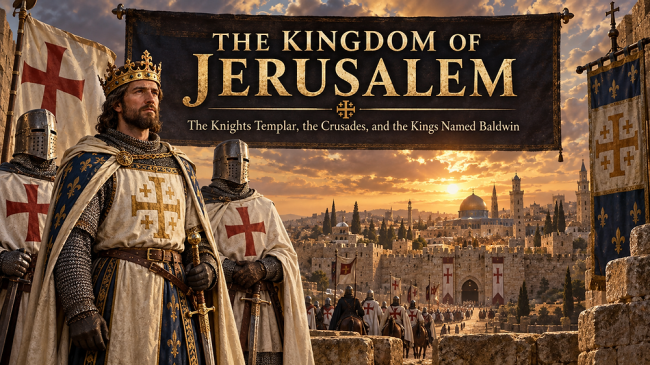
The medieval Kingdom of Jerusalem emerged during one of the most dramatic and complicated periods in Christian history. Born from the First Crusade, it became a place where faith, political ambition, military necessity, pilgrimage, and competing cultures met.
Its history is inseparably connected to the Crusades, several kings named Baldwin, and the rise of the Poor Fellow-Soldiers of Christ and of the Temple of Solomon—better known as the Knights Templar. https://www.usaknightstemplar.org/post... moreThe medieval Kingdom of Jerusalem emerged during one of the most dramatic and complicated periods in Christian history. Born from the First Crusade, it became a place where faith, political ambition, military necessity, pilgrimage, and competing cultures met.
The medieval Kingdom of Jerusalem emerged during one of the most dramatic and complicated periods in Christian history. Born from the First Crusade, it became a place where faith, political amb...