WHEN WE STAND IN GOD’S PRESENCE, EVERYTHING CHANGES
There will come a moment when the noise of this world fades away, the struggles are over, and we finally understand that God was faithful through every season.
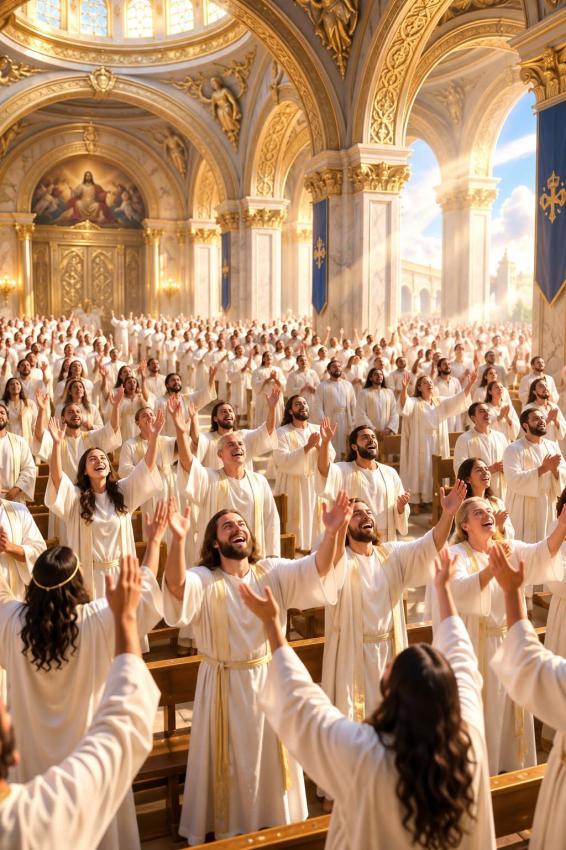
The picture of people lifting their hands in worship reminds us that heaven is not about earthly success, possessions, popularity, or recognition. It is about the presence of God and giving Him the glory He deserves.
One day, the tears we cried in secret will no longer define us. The ... moreWHEN WE STAND IN GOD’S PRESENCE, EVERYTHING CHANGES
There will come a moment when the noise of this world fades away, the struggles are over, and we finally understand that God was faithful through every season.
The picture of people lifting their hands in worship reminds us that heaven is not about earthly success, possessions, popularity, or recognition. It is about the presence of God and giving Him the glory He deserves.
One day, the tears we cried in secret will no longer define us. The battles we fought will be over. The prayers we thought were unanswered will make sense in God's perfect timing.
So while we are still here, worship Him.
Worship Him when life is good.
Worship Him when life is difficult.
Worship Him when you understand.
Worship Him when you don't have the answers.
Don't wait until everything is perfect before you praise God. Praise Him in the middle of the storm.
Your circumstances may change, but God remains faithful.
There are people today who are exhausted from fighting battles nobody sees. Some are carrying disappointment, fear, loneliness, and wounds from their past. But your life can become a testimony that points them back to God.
Don't just tell people about faith—live it.
Don't just speak about hope—carry hope.
Don't just talk about Jesus—show His love through your actions.
And if God has blessed you, don't forget the people who are still searching.
Reach the lost. Encourage the broken. Forgive. Serve. Pray. Love.
Because the greatest achievement of your life will not be how many people knew your name—it will be how many lives were touched because you allowed God to work through you.
Keep your eyes on Christ.
When the world says, “Give up,” keep believing.
When fear says, “You cannot,” keep walking.
When the enemy says, “There is no hope,” remember that your hope is not found in circumstances—it is found in God.
One day, we will understand the value of every prayer, every sacrifice, every act of obedience, and every moment we chose faith over fear.
Until that day comes, lift your hands, keep your heart surrendered, and keep your eyes on Jesus.
🙏 Lord, let my life become an offering of worship. Give me strength to remain faithful, courage to reach the lost, compassion for the broken, and a heart that seeks Your presence above everything else. May my life point others toward You. Amen.
⚔️✝️✠ KCP John Scivoletti ✠✝️📖⚔️
⚔️✝️✠ Turco Joan of Arc Priory ✠✝️📖⚔️
⚔️✝️✠✠Act and God will Act (Actus et Deus Act)✠✠✝️📖⚔️
👑✨ THE THRONE OF GOD — WHERE GLORY HAS NO END
There is a throne that cannot be shaken, a kingdom that cannot be destroyed, and a King whose authority will never come to an end.
The world has many kingdoms. Leaders rise and fall. Empires are built and eventually disappear. Wealth fades, human power changes, and earthly glory does not last forever. But the throne of God stands forever.
The Bible gives us a glimpse of heaven’s glory:
“Holy, holy, holy, Lord God Almighty, which was, and is, and ... more👑✨ THE THRONE OF GOD — WHERE GLORY HAS NO END
There is a throne that cannot be shaken, a kingdom that cannot be destroyed, and a King whose authority will never come to an end.
The world has many kingdoms. Leaders rise and fall. Empires are built and eventually disappear. Wealth fades, human power changes, and earthly glory does not last forever. But the throne of God stands forever.
The Bible gives us a glimpse of heaven’s glory:
“Holy, holy, holy, Lord God Almighty, which was, and is, and is to come.” — Revelation 4:8
Imagine standing before the presence of the Almighty—surrounded by heavenly worship, angels, and the glory of God shining brighter than anything this world can offer. Every earthly treasure would seem small compared with His presence.
One day, every knee will bow and every tongue will acknowledge the greatness of God.
So don't let the temporary things of this world become more important than eternity.
Your possessions will not follow you forever.
Your position will not last forever.
Your achievements will not last forever.
The approval of people will not last forever.
But God is eternal. His Word is eternal. His kingdom is eternal.
If God has given you another day, use it to seek Him. If you have breath, use it to worship Him. If you have a heart that can still turn toward Him, don't wait until tomorrow.
Jesus said:
“Lay not up for yourselves treasures upon earth, where moth and rust doth corrupt… but lay up for yourselves treasures in heaven.” — Matthew 6:19–20
The greatest goal of life is not simply to become successful on earth. The greatest goal is to be ready for eternity.
Let this heavenly picture remind you that this world is not our final destination. There is a kingdom greater than anything we can build here, and there is a glory beyond anything human eyes can fully imagine.
🔥 Seek God while you have time. Follow Christ while you have breath. Keep your heart faithful while you walk through this world.
One day, the struggles will be over.
One day, the tears will be wiped away.
One day, faith will become sight.
Until then, keep your eyes on Jesus.
👑 The earthly throne may disappear, but the throne of God will stand forever.
Live for eternity. Worship the King. Stay faithful. And never trade an eternal crown for temporary pleasures. ✝️❤️
⚔️✝️✠ KCP John Scivoletti ✠✝️📖⚔️
⚔️✝️✠ Turco Joan of Arc Priory ✠✝️📖⚔️
⚔️✝️✠✠Act and God will Act (Actus et Deus Act)✠✠✝️📖⚔️
✨ HEAVEN IS NOT JUST A DREAM—IT IS THE PROMISE OF GOD TO THOSE WHO BELIEVE AND REMAIN FAITHFUL. ✨
In a world filled with pain, disappointment, struggles, and tears, never forget that this life is not the end of the story. There is a place prepared by God for His children—a home where there will be no more death, no more sorrow, no more crying, and no more pain. 🕊️
Maybe today you are tired. Maybe you have been praying for a long time and wondering when your breakthrough will come. Maybe you ar... more✨ HEAVEN IS NOT JUST A DREAM—IT IS THE PROMISE OF GOD TO THOSE WHO BELIEVE AND REMAIN FAITHFUL. ✨
In a world filled with pain, disappointment, struggles, and tears, never forget that this life is not the end of the story. There is a place prepared by God for His children—a home where there will be no more death, no more sorrow, no more crying, and no more pain. 🕊️
Maybe today you are tired. Maybe you have been praying for a long time and wondering when your breakthrough will come. Maybe you are carrying battles that nobody else knows about. But do not give up. God sees you. God knows your struggles. God hears your prayers.
Every tear you have shed is known by Him. Every silent prayer has been heard. Every trial you endured while choosing to remain faithful matters.
This world is temporary. The things people chase—wealth, success, recognition, possessions, and earthly pleasures—will one day pass away. But the promises of God remain forever.
📖 “He will wipe every tear from their eyes. There will be no more death or mourning or crying or pain.” — Revelation 21:4
So keep walking with Jesus.
When you are tired, keep going.
When you fall, get back up.
When you feel lost, return to God.
When you cannot see the way, trust Him.
When your prayers seem unanswered, keep believing.
Do not trade eternity for temporary pleasures. Do not allow the struggles of today to make you forget the glory that God has promised tomorrow.
One day, faith will become sight. One day, the waiting will be over. One day, every tear will be wiped away. One day, we will stand in the presence of our King.
Until that day comes, remain faithful. Keep your heart close to God. Love others. Forgive. Pray. Serve. Obey His Word. And never stop looking toward Jesus.
🙏 “Lord, help me remain faithful until the end. When life becomes difficult, strengthen my faith. When I am discouraged, remind me of Your promises. Keep my heart focused on You, and lead me toward the eternal home You have prepared. Amen.”
DON’T GIVE UP. DON’T LOSE YOUR FAITH. KEEP YOUR EYES ON JESUS. ✝️🕊️
The journey may be difficult, but eternity with God will be worth it all. ❤️✨
⚔️✝️✠ KCP John Scivoletti ✠✝️📖⚔️
⚔️✝️✠ Turco Joan of Arc Priory ✠✝️📖⚔️
⚔️✝️✠✠Act and God will Act (Actus et Deus Act)✠✠✝️📖⚔️
✝️ Romans 8:31–39 — If God Is for Us, Who Can Be Against Us? | God’s Unshakable Love & Victory in Christ
What if the greatest truth you needed to hear today is this: if God is on your side, nothing can ultimately defeat you?
Life often feels like an uphill battle. We face fear, disappointment, rejection, suffering, uncertainty, and spiritual struggles that test our faith. In those moments, it’s easy to wonder if God has forgotten us. But Romans 8:31–39 gives one of the most powerful assurances... more✝️ Romans 8:31–39 — If God Is for Us, Who Can Be Against Us? | God’s Unshakable Love & Victory in Christ
What if the greatest truth you needed to hear today is this: if God is on your side, nothing can ultimately defeat you?
Life often feels like an uphill battle. We face fear, disappointment, rejection, suffering, uncertainty, and spiritual struggles that test our faith. In those moments, it’s easy to wonder if God has forgotten us. But Romans 8:31–39 gives one of the most powerful assurances found anywhere in Scripture.
The Apostle Paul boldly asks:
“If God is for us, who can be against us?” — Romans 8:31
This doesn’t mean believers will never face opposition. Christians throughout history have endured hardship, persecution, illness, and trials. Rather, Paul reminds us that no enemy, no circumstance, and no spiritual force can ultimately overcome God’s purposes for those who belong to Christ.
Paul continues by pointing to the greatest proof of God’s love:
“He who did not spare His own Son, but gave Him up for us all…” (Romans 8:32)
If God was willing to give His Son for our salvation, we can trust His love and faithfulness in every season of life.
The chapter reaches its breathtaking conclusion:
“Neither death nor life, neither angels nor demons, neither the present nor the future, nor any powers… nor anything else in all creation, will be able to separate us from the love of God that is in Christ Jesus our Lord.” (Romans 8:38–39)
What an incredible promise! Circumstances may change. People may disappoint us. The future may seem uncertain. But God’s love remains constant.
If you’re struggling today, remember this truth: your hope is not based on your strength—it is anchored in the unchanging love of Jesus Christ. Because of Him, we are more than conquerors, not through our own power, but through the One who loved us.
🙏 Prayer
Heavenly Father, thank You for Your unfailing love revealed through Jesus Christ. When fear, doubt, or discouragement tries to overwhelm us, remind us that You are for us and that nothing can separate us from Your love. Strengthen our faith, help us trust Your promises, and give us courage to stand firm through every trial. May our confidence always rest in Christ alone. In Jesus’ name, Amen.
❤️ If this message encouraged you today, comment “Amen,” share it with someone who needs hope, and remember: God’s love is stronger than every fear, every trial, and every obstacle you face.
Discover the life-changing promises of Romans 8:31–39, one of the Bible’s most encouraging passages about God’s love, victory, and faithfulness. Learn what “If God is for us, who can be against us?” truly means and why nothing can separate believers from the love of God in Christ Jesus.
⚔️✝️✠ KCP John Scivoletti ✠✝️📖⚔️
⚔️✝️✠ Turco Joan of Arc Priory ✠✝️📖⚔️
⚔️✝️✠✠Act and God will Act (Actus et Deus Act)✠✠✝️📖⚔️
🙏 John 17 — Jesus’ Powerful Prayer for Believers | The Longest Recorded Prayer of Jesus
What if you could listen to Jesus praying… and discover that He was praying for you?
Among all the prayers recorded in the Bible, John 17 stands apart. Often called “The High Priestly Prayer,” it is the longest recorded prayer of Jesus and one of the most personal, profound, and comforting passages in all of Scripture.
On the night before His crucifixion, knowing the suffering that awaited Him, Jesus lifte... more🙏 John 17 — Jesus’ Powerful Prayer for Believers | The Longest Recorded Prayer of Jesus
What if you could listen to Jesus praying… and discover that He was praying for you?
Among all the prayers recorded in the Bible, John 17 stands apart. Often called “The High Priestly Prayer,” it is the longest recorded prayer of Jesus and one of the most personal, profound, and comforting passages in all of Scripture.
On the night before His crucifixion, knowing the suffering that awaited Him, Jesus lifted His eyes to heaven and prayed—not only for Himself, not only for His disciples, but also for everyone who would one day believe in Him through their message.
That means His prayer reaches across the centuries to every believer who places their faith in Christ.
One of the most remarkable verses says:
“My prayer is not for them alone. I pray also for those who will believe in Me through their message.” — John 17:20
Imagine that moment. Before enduring the cross, Jesus was already thinking about future generations of believers. His prayer reveals His deep love, His compassion, and His desire that His followers remain faithful.
Throughout John 17, Jesus prays for several important things:
❤️ That believers would know God more deeply.
🤝 That His followers would be united in love and truth.
🛡️ That God would protect them from the evil one while they live in the world.
📖 That they would be sanctified by God’s truth, for “Your word is truth.” (John 17:17)
✨ That they would one day be with Him and witness His glory forever.
John 17 reminds us that Christianity is not merely about religious rituals—it is about a relationship with the living Christ, who continues to intercede for His people.
When life becomes difficult, remember this incredible truth: Jesus not only died and rose again for those who trust Him, but Scripture also teaches that He continues to intercede for believers before the Father (see Romans 8:34 and Hebrews 7:25). His care for His people did not end at the cross.
🙏 Prayer
Heavenly Father, thank You for the love of Jesus Christ, who prayed for His followers with compassion and faithfulness. Help us grow in Your truth, remain united in love, and walk faithfully through every challenge. Protect us from temptation, strengthen our faith, and shape us into people who reflect the character of Christ. May our lives bring glory to You until the day we see You face to face. In Jesus’ name, Amen.
❤️ If this message encouraged you today, comment “Amen,” share it with someone who needs hope, and remember: before Jesus went to the cross, He prayed for all who would believe—including you.
Discover the profound meaning of John 17, the longest recorded prayer of Jesus, often called the High Priestly Prayer. Learn why Jesus prayed for His disciples and future believers, what He asked the Father on their behalf, and how this powerful chapter encourages Christians to live in unity, truth, and faithful devotion to God.
⚔️✝️✠ KCP John Scivoletti ✠✝️📖⚔️
⚔️✝️✠ Turco Joan of Arc Priory ✠✝️📖⚔️
⚔️✝️✠✠Act and God will Act (Actus et Deus Act)✠✠✝️📖⚔️
🙏 Psalm 51 — A Powerful Prayer of Repentance | “Create in Me a Clean Heart, O God”
What if the greatest miracle God wants to perform isn’t changing your circumstances—but transforming your heart?
Everyone makes mistakes. We all fall short, carry regrets, and wrestle with sin, guilt, or shame. Sometimes we try to hide our failures, hoping time will erase them. But the Bible shows a better way: honest repentance before a merciful God.
Psalm 51 is one of the most heartfelt prayers in all of Scri... more🙏 Psalm 51 — A Powerful Prayer of Repentance | “Create in Me a Clean Heart, O God”
What if the greatest miracle God wants to perform isn’t changing your circumstances—but transforming your heart?
Everyone makes mistakes. We all fall short, carry regrets, and wrestle with sin, guilt, or shame. Sometimes we try to hide our failures, hoping time will erase them. But the Bible shows a better way: honest repentance before a merciful God.
Psalm 51 is one of the most heartfelt prayers in all of Scripture. King David wrote this psalm after being confronted about his sin. Instead of making excuses, blaming others, or defending himself, David humbled himself before God and sought forgiveness.
His famous prayer has comforted millions for generations:
“Create in me a clean heart, O God, and renew a steadfast spirit within me.” — Psalm 51:10
David understood that true change begins on the inside. He didn’t simply ask God to remove the consequences of his actions—he asked God to transform his heart.
Psalm 51 teaches us that genuine repentance is more than feeling sorry. It is turning back to God with humility, trusting in His mercy, and allowing Him to renew us. God’s forgiveness is not something we earn by our own goodness; it is a gift of His grace for those who sincerely seek Him.
This psalm also reminds us that no failure is beyond God’s ability to redeem. When we confess our sins and place our trust in Him, He offers forgiveness, restoration, and a new beginning through Jesus Christ.
If you’ve been carrying guilt, disappointment, or spiritual weariness, know this: God’s mercy is greater than your past. His love is stronger than your failures. He delights in restoring hearts that come to Him with sincerity and faith.
🙏 Prayer
Heavenly Father, thank You for Your mercy and unfailing love. Search our hearts and reveal anything that keeps us from You. Create in us clean hearts, renew a steadfast spirit within us, and help us walk in obedience each day. Thank You for the forgiveness and hope found through Jesus Christ. Teach us to live with humility, gratitude, and hearts that desire Your will above our own. In Jesus’ name, Amen.
❤️ If this prayer spoke to your heart, comment “Amen,” share it with someone who needs encouragement today, and remember: God’s grace is greater than your greatest mistake.
Discover the powerful message of Psalm 51, the Bible’s greatest prayer of repentance. Learn what “Create in me a clean heart, O God” truly means, why King David wrote this psalm, and how God’s mercy, forgiveness, and transforming grace bring hope to every believer who sincerely turns back to Him.
⚔️✝️✠ KCP John Scivoletti ✠✝️📖⚔️
⚔️✝️✠ Turco Joan of Arc Priory ✠✝️📖⚔️
⚔️✝️✠✠Act and God will Act (Actus et Deus Act)✠✠✝️📖⚔️
👑 Matthew 6:33 — Seek First the Kingdom of God | The Secret to a Life of True Peace and Purpose
What if you’ve been chasing the wrong things all your life?
Many people spend years pursuing money, success, recognition, possessions, and security, believing these things will finally bring happiness. Yet even after achieving their goals, many still feel empty.
More than 2,000 years ago, Jesus revealed a life-changing principle that turns the world’s priorities upside down.
He said:
“But seek fi... more👑 Matthew 6:33 — Seek First the Kingdom of God | The Secret to a Life of True Peace and Purpose
What if you’ve been chasing the wrong things all your life?
Many people spend years pursuing money, success, recognition, possessions, and security, believing these things will finally bring happiness. Yet even after achieving their goals, many still feel empty.
More than 2,000 years ago, Jesus revealed a life-changing principle that turns the world’s priorities upside down.
He said:
“But seek first the kingdom of God and His righteousness, and all these things shall be added to you.” — Matthew 6:33 (NKJV)
This verse comes near the end of Jesus’ teaching about worry and anxiety. He reminds His listeners that our Heavenly Father already knows our needs. Instead of allowing fear to control our lives, Jesus calls us to make God’s Kingdom and His righteousness our highest priority.
Seeking God’s Kingdom means placing Him first in every area of life—our decisions, relationships, work, finances, and daily choices. It means trusting His wisdom above our own and pursuing a life that reflects His love, truth, and righteousness.
Notice that Jesus does not promise a life free from challenges or unlimited earthly wealth. Rather, He assures believers that when God is our first priority, we can trust Him to provide what we truly need according to His perfect will and timing.
When we chase the world, peace often slips away. But when we seek Christ first, we discover something far greater than material success: a relationship with God, lasting hope, wisdom for every decision, strength during trials, and peace that circumstances cannot take away.
The greatest blessing isn’t simply what God gives us—it’s knowing the Giver Himself.
🙏 Prayer
Heavenly Father, help us seek Your Kingdom above everything else. Teach us to trust You instead of worrying about tomorrow. Guide our hearts to desire what honors You, strengthen our faith, and provide everything we need according to Your perfect will. May our lives reflect Your love and righteousness each day. In Jesus’ name, Amen.
❤️ If this verse encouraged you today, comment “Amen,” share it with someone who needs hope, and remember: when Christ is first, everything else finds its proper place.
Discover the powerful meaning of Matthew 6:33, where Jesus teaches believers to seek first the Kingdom of God and His righteousness. Learn how this timeless verse addresses worry, priorities, God’s provision, and living a Christ-centered life filled with peace, purpose, and trust in God’s faithful care.
⚔️✝️✠ KCP John Scivoletti ✠✝️📖⚔️
⚔️✝️✠ Turco Joan of Arc Priory ✠✝️📖⚔️
⚔️✝️✠✠Act and God will Act (Actus et Deus Act)✠✠✝️📖⚔️
✝️ Jesus Says: “Take Up Your Cross Daily and Follow Me” | The True Meaning of Luke 9:23
What if Jesus asked you today, “Will you follow Me?” Would you be willing to leave everything behind?
Throughout His earthly ministry, Jesus didn’t promise His followers an easy life. He never said the path of discipleship would be free from hardship, rejection, or sacrifice. Instead, Jesus gave one of His most powerful and challenging invitations—one that continues to transform lives more than 2,000 years ... more✝️ Jesus Says: “Take Up Your Cross Daily and Follow Me” | The True Meaning of Luke 9:23
What if Jesus asked you today, “Will you follow Me?” Would you be willing to leave everything behind?
Throughout His earthly ministry, Jesus didn’t promise His followers an easy life. He never said the path of discipleship would be free from hardship, rejection, or sacrifice. Instead, Jesus gave one of His most powerful and challenging invitations—one that continues to transform lives more than 2,000 years later.
Jesus says:
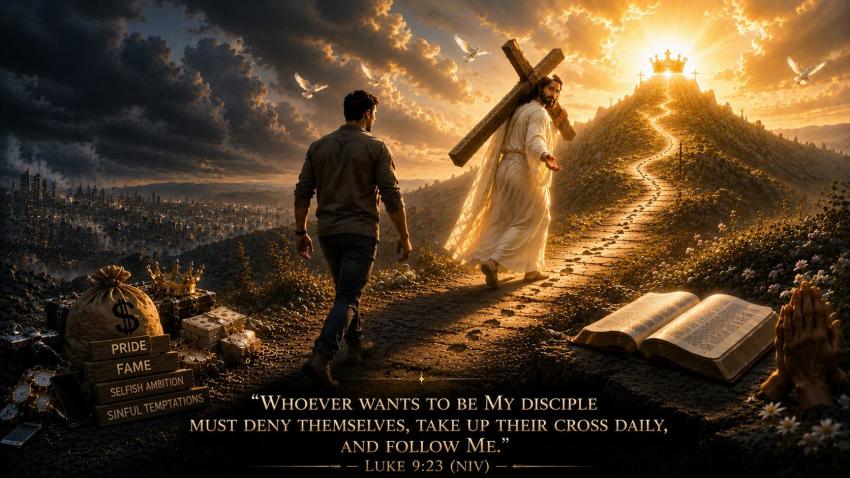
“Whoever wants to be My disciple must deny themselves, take up their cross daily, and follow Me.” — Luke 9:23 (NIV)
These words reveal what it truly means to be a disciple of Christ.
To deny yourself means choosing God’s will above selfish desires, pride, and worldly ambitions. It is surrendering our plans so that Christ becomes the Lord of every part of our lives.
To take up your cross daily is a picture of continual faithfulness. In Jesus’ day, the cross represented sacrifice and complete surrender. Today, it reminds believers that following Christ may require courage, perseverance, and obedience, even when it is difficult.
Finally, Jesus simply says, “Follow Me.” Christianity is not merely believing facts about Jesus—it is walking with Him every day, trusting His guidance, obeying His Word, and becoming more like Him.
The road of discipleship is not always the easiest path, but it is the only path that leads to eternal life, lasting peace, and a relationship with the Savior who gave His life for us.
Every day we face a decision: follow the temporary values of this world or follow Jesus Christ, whose Kingdom will never end.
The cross may involve sacrifice today, but it also points to the hope of the resurrection, the promise of God’s presence, and the joy of eternal life with Him.
🙏 Prayer
Heavenly Father, thank You for sending Jesus to show us the way of true discipleship. Give us the courage to deny ourselves, take up our cross daily, and faithfully follow Him. Strengthen us when the journey is difficult, guide us by Your Word, and help us live each day for Your glory. May our lives reflect the love, humility, and faithfulness of Jesus Christ. In His mighty name, Amen.
❤️ If Jesus’ words challenged or encouraged you today, comment “Amen,” share this message with someone who wants to grow in faith, and remember: the greatest journey you’ll ever take begins with one step of obedience to Christ.
Discover the true meaning of Luke 9:23, where Jesus says, “Whoever wants to be My disciple must deny themselves, take up their cross daily, and follow Me.” Learn what daily discipleship, surrender, and following Christ really mean, and why Jesus’ call remains one of the most life-changing invitations in the Bible.
⚔️✝️✠ KCP John Scivoletti ✠✝️📖⚔️
⚔️✝️✠ Turco Joan of Arc Priory ✠✝️📖⚔️
⚔️✝️✠✠Act and God will Act (Actus et Deus Act)✠✠✝️📖⚔️
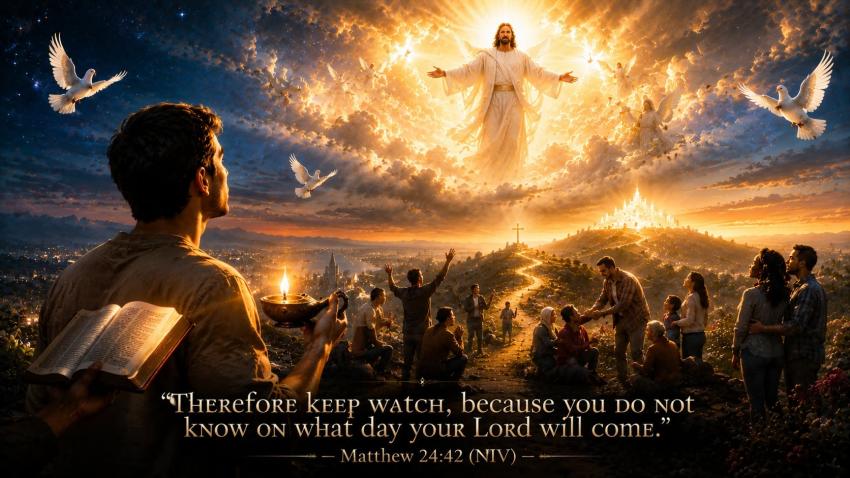
✨ Jesus Says: “Keep Watch” | The Hope and Readiness of Matthew 24:42
If Jesus spoke to you today and gave you one command before He returns, would you be ready to obey it?
As Jesus taught His disciples about the future and His promised return, He didn’t tell them to live in fear or spend their lives trying to predict dates. Instead, He gave a simple but powerful command that still speaks to every believer today.
Jesus says:
“Therefore keep watch, because you do not know on what day your Lord... more✨ Jesus Says: “Keep Watch” | The Hope and Readiness of Matthew 24:42
If Jesus spoke to you today and gave you one command before He returns, would you be ready to obey it?
As Jesus taught His disciples about the future and His promised return, He didn’t tell them to live in fear or spend their lives trying to predict dates. Instead, He gave a simple but powerful command that still speaks to every believer today.
Jesus says:
“Therefore keep watch, because you do not know on what day your Lord will come.” — Matthew 24:42 (NIV)
These words are not meant to create anxiety—they are an invitation to live every day with faith, hope, and spiritual readiness.
To keep watch means far more than simply looking toward the sky. It means living each day with a heart devoted to Christ, remaining faithful in prayer, grounded in God’s Word, serving others with love, and walking in obedience even when no one is watching.
Jesus repeatedly taught that His followers should be ready at all times—not because they know when He will return, but because they know He will return. The certainty of His promise should inspire holy living, joyful expectation, and steadfast hope.
Being spiritually prepared isn’t about fear of the future. It’s about faithfully living in the present. Every act of kindness, every prayer, every moment of worship, every decision to forgive, and every opportunity to share God’s love becomes part of living watchfully for Christ.
One day, the same Jesus who came in humility will return in glory. Until that day, believers are called to remain faithful, encourage one another, and shine as lights in a world searching for hope.
The question isn’t whether Jesus will return.
The question is whether we are living today as people who are ready to welcome Him with joy.
🙏 Prayer
Heavenly Father, thank You for the promise that Jesus will return. Help us remain faithful while we wait, living each day with hope, obedience, and love. Strengthen our faith, deepen our commitment to Your Word, and help us serve others with joyful hearts. May our lives reflect Your light until the day we see Christ face to face. In Jesus’ name, Amen.
❤️ If this message encouraged your heart, comment “Amen,” share it with someone who is longing for Christ’s return, and remember: every day is an opportunity to faithfully live for the King who is coming again.
Discover the powerful meaning of Matthew 24:42, where Jesus says, “Keep watch, because you do not know on what day your Lord will come.” Learn what spiritual readiness truly means, why Christians should live with hope instead of fear, and how faithful daily living prepares believers for Christ’s promised return.
⚔️✝️✠ KCP John Scivoletti ✠✝️📖⚔️
⚔️✝️✠ Turco Joan of Arc Priory ✠✝️📖⚔️
⚔️✝️✠✠Act and God will Act (Actus et Deus Act)✠✠✝️📖⚔️
❤️ Jesus Says: “Love Your Neighbor as Yourself” | The Life-Changing Message of Matthew 22:39
If Jesus stood before you today and asked, “How have you loved the people around you?”—what would your answer be?
When Jesus was asked about the greatest commandment, He first declared that we must love God with all our heart, soul, and mind. Then He immediately added a second command that is inseparable from the first.
Jesus says:
“Love your neighbor as yourself.” — Matthew 22:39 (NIV)
This simple ... more❤️ Jesus Says: “Love Your Neighbor as Yourself” | The Life-Changing Message of Matthew 22:39
If Jesus stood before you today and asked, “How have you loved the people around you?”—what would your answer be?
When Jesus was asked about the greatest commandment, He first declared that we must love God with all our heart, soul, and mind. Then He immediately added a second command that is inseparable from the first.
Jesus says:
“Love your neighbor as yourself.” — Matthew 22:39 (NIV)
This simple sentence carries extraordinary power. It reveals that genuine love for God is demonstrated by the way we treat other people.
Who is our neighbor?
Jesus answered that question through the Parable of the Good Samaritan. Our neighbor is not limited to family, friends, or people who think like us. Our neighbor is anyone God places in our path—regardless of their background, nationality, social status, or circumstances.
To love our neighbor means showing compassion to the hurting, kindness to strangers, forgiveness to those who have wronged us, generosity to those in need, patience with the difficult, and mercy to the undeserving. It means choosing humility instead of pride and serving others as Christ served us.
This command does not call us to ignore truth or approve of every action. Biblical love seeks another person’s good while remaining rooted in God’s truth. It reflects the sacrificial love that Jesus demonstrated through His life, ministry, death, and resurrection.
Imagine what would happen if every Christian intentionally lived out these words every day. Families would grow stronger. Communities would become more compassionate. Divisions would begin to heal. The world would see the transforming power of Christ through His people.
Loving your neighbor doesn’t always require grand gestures. Sometimes it begins with a listening ear, an encouraging word, a helping hand, a sincere prayer, or a simple act of kindness.
Every day, God gives us opportunities to reflect His love to someone else.
🙏 Prayer
Heavenly Father, thank You for showing us perfect love through Jesus Christ. Fill our hearts with compassion, humility, and generosity. Help us see others through Your eyes and give us the courage to love, forgive, serve, and encourage those around us. Let our lives become a testimony of Your grace so that others may come to know You. In Jesus’ name, Amen.
❤️ If this message encouraged you, comment “Amen,” share it with someone you care about, and remember: every act of genuine love points people toward Jesus Christ.
Discover the true meaning of Matthew 22:39, where Jesus says, “Love your neighbor as yourself.” Learn who your neighbor is according to the Bible, how Christ demonstrated perfect love, and why compassion, forgiveness, kindness, and service are essential marks of every follower of Jesus.
⚔️✝️✠ KCP John Scivoletti ✠✝️📖⚔️
⚔️✝️✠ Turco Joan of Arc Priory ✠✝️📖⚔️
⚔️✝️✠✠Act and God will Act (Actus et Deus Act)✠✠✝️📖⚔️
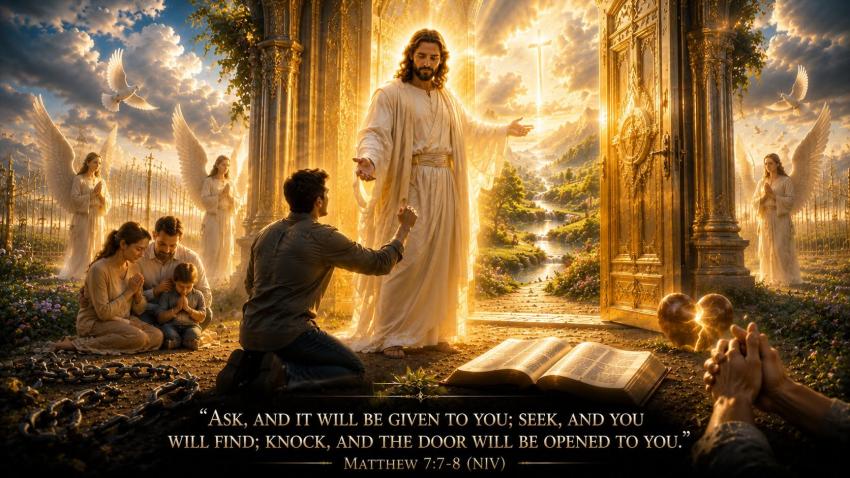
🙏 Jesus Says: “Ask, Seek, Knock” | The Powerful Promise of Matthew 7:7–8
If Jesus personally invited you to ask Him for anything according to God’s will, would you boldly come to Him—or would you stay silent because of fear or doubt?
During the Sermon on the Mount, Jesus gave one of the Bible’s most encouraging invitations to everyone who longs to know God more deeply.
Jesus says:
“Ask, and it will be given to you; seek, and you will find; knock, and the door will be opened to you.” — Matthe... more🙏 Jesus Says: “Ask, Seek, Knock” | The Powerful Promise of Matthew 7:7–8
If Jesus personally invited you to ask Him for anything according to God’s will, would you boldly come to Him—or would you stay silent because of fear or doubt?
During the Sermon on the Mount, Jesus gave one of the Bible’s most encouraging invitations to everyone who longs to know God more deeply.
Jesus says:
“Ask, and it will be given to you; seek, and you will find; knock, and the door will be opened to you.” — Matthew 7:7–8 (NIV)
These words reveal the loving heart of our Heavenly Father. Jesus invites us to approach God with confidence, persistence, and faith—not because we deserve His favor, but because He is gracious, loving, and faithful.
To ask means bringing our prayers, needs, fears, and desires before God with humility and trust.
To seek means pursuing God Himself above everything else. It is a lifelong commitment to know His will through His Word, prayer, worship, and faithful obedience.
To knock symbolizes perseverance. Even when answers seem delayed, Jesus encourages us not to give up. We continue trusting that God hears every sincere prayer and responds according to His perfect wisdom, timing, and purpose.
This passage is not a promise that God will grant every request exactly as we imagine. Rather, Jesus assures us that our Heavenly Father lovingly gives what is truly good to those who seek Him. Sometimes His answer is “yes,” sometimes “wait,” and sometimes “I have something better.” Because God sees the end from the beginning, His answers are always guided by perfect love and wisdom.
The greatest gift we receive is not merely answered prayers—it is a deeper relationship with the One who invites us into His presence. When we seek God first, He transforms our hearts, strengthens our faith, and opens doors that lead to His perfect purpose.
Keep praying. Keep seeking. Keep knocking.
The God who invites you to come is always faithful.
🙏 Prayer
Heavenly Father, thank You for inviting us to come before You with confidence. Teach us to ask with faith, seek You above everything else, and keep knocking with unwavering trust. Help us accept Your answers with humble hearts, knowing that Your plans are always good. Strengthen our faith, deepen our relationship with You, and lead us according to Your perfect will. In Jesus’ name, Amen.
❤️ If this promise encouraged you today, comment “Amen,” share it with someone waiting on God, and remember: every sincere prayer is heard by a loving Father who knows exactly what you need.
Discover the powerful promise of Matthew 7:7–8, where Jesus says, “Ask, seek, and knock.” Learn what these three commands truly mean, why persistent prayer matters, and how God faithfully answers according to His perfect wisdom, love, and timing.
Matthew 7:7-8, Ask seek knock, Jesus says, Prayer, Persistent prayer, Answered prayer, Trust God, Jesus Christ, Bible study, Christian encouragement, Faith in God, Daily devotional, Scripture, God’s promises, Seek God, Christian living, Kingdom of God, Sermon on the Mount, Gospel, Matthew 7 explained.
⚔️✝️✠ KCP John Scivoletti ✠✝️📖⚔️
⚔️✝️✠ Turco Joan of Arc Priory ✠✝️📖⚔️
⚔️✝️✠✠Act and God will Act (Actus et Deus Act)✠✠✝️📖⚔️


































Priory of the Holy Trinity
Deus Avec Nous