The Book of Revelation
Chapter 13 – The Extent of the Beast’s Authority
After introducing the Beast from the sea, the prophecy continues by describing the scope of his authority and the persecution that will follow.
John writes:
“And it was given unto him to make war with the saints, and to overcome them: and power was given him over all kindreds, and tongues, and nations.”
(Revelation 13:7)
This statement raises an important interpretive question: Does this mean the Antichrist will litera... moreThe Book of Revelation
Chapter 13 – The Extent of the Beast’s Authority
After introducing the Beast from the sea, the prophecy continues by describing the scope of his authority and the persecution that will follow.
John writes:
“And it was given unto him to make war with the saints, and to overcome them: and power was given him over all kindreds, and tongues, and nations.”
(Revelation 13:7)
This statement raises an important interpretive question: Does this mean the Antichrist will literally rule every nation and every individual on earth?
Many interpreters assume that the Beast becomes a complete global dictator, but a careful comparison with other prophetic passages suggests that the expression may be limited in scope according to the biblical use of universal language.
The Biblical Use of Universal Language
Throughout Scripture, words such as all, every, or the whole world are sometimes used figuratively to describe a very large portion rather than absolute universality.
Examples appear throughout both Testaments.
In the days of Noah, God declared:
“I… do bring a flood of waters upon the earth, to destroy all flesh.”
(Genesis 6:17)
Yet Noah and those within the ark survived (Genesis 7:23).
When Jericho was destroyed we read:
“They utterly destroyed all that was in the city.”
(Joshua 6:21)
Yet Rahab and her household were spared (Joshua 6:22–25).
Similarly, when Caesar Augustus issued a decree:
“That all the world should be taxed.”
(Luke 2:1)
The decree applied only to the Roman Empire, not to every nation on earth.
Even the Apostle Paul could say that the gospel had been proclaimed:
“To every creature which is under heaven.”
(Colossians 1:23)
Yet the gospel clearly had not reached every tribe or continent at that time.
These examples demonstrate that biblical writers often use universal expressions to refer to the full extent of a particular realm or empire, not necessarily the entire globe.
The Ten Kingdoms of the Final Empire
Scripture provides additional clues regarding the geographical limits of the Beast’s political authority.
In Book of Daniel, the final world empire is represented by a beast with ten horns.
Daniel writes:
“The ten horns out of this kingdom are ten kings that shall arise.”
(Daniel 7:24)
The same symbolism appears in the Book of Revelation:
“The ten horns which thou sawest are ten kings… These shall give their power and strength unto the beast.”
(Revelation 17:12–13)
These passages suggest that the Beast’s primary authority rests upon a confederation of ten kings, commonly understood as a revived/revised political structure emerging from the territory of the ancient Roman Empire.
The Antichrist rises from within this system and eventually dominates it, even overthrowing three of the kings (Daniel 7:8, 24).
The Duration of the Beast’s Dominion
The reign of the Beast is strictly limited by divine decree.
John records:
“Power was given unto him to continue forty and two months.”
(Revelation 13:5)
This period corresponds to:
• Three and one-half years
• 1,260 days
• A time, times, and half a time
These expressions appear repeatedly in prophetic passages:
• Daniel 7:25
• Daniel 12:7
• Revelation 11:2–3
• Revelation 12:6, 14
• Revelation 13:5
This period represents the final half of Daniel’s Seventieth Week (Daniel 9:27), commonly referred to as the Great Tribulation.
Nations Outside the Beast’s Control
Additional prophecies indicate that not every nation will fall completely under the authority of the Antichrist.
Daniel records that when the king of the north advances into the land:
“These shall escape out of his hand, even Edom, and Moab, and the chief of the children of Ammon.”
(Daniel 11:41)
Other nations will oppose him militarily:
“Tidings out of the east and out of the north shall trouble him.”
(Daniel 11:44)
These passages imply that independent powers still exist, even during the height of the Beast’s reign.
This also explains why demonic spirits later go out:
“To the kings of the earth and of the whole world, to gather them to the battle of that great day of God Almighty.”
(Revelation 16:14)
If every king were already under the Antichrist’s direct control, such supernatural persuasion would be unnecessary.
Survivors of the Tribulation
Another important consideration concerns the population of the Millennial Kingdom.
Jesus taught that when He returns:
“Before him shall be gathered all nations: and he shall separate them one from another, as a shepherd divideth his sheep from the goats.”
(Matthew 25:32)
Some nations are called:
“Blessed of my Father… inherit the kingdom.”
(Matthew 25:34)
If every person on earth were either killed for refusing the mark or eternally condemned for taking it, there would be no surviving nations to enter the Millennium.
Yet numerous prophecies describe nations continuing into Christ’s kingdom:
• Isaiah 2:2–4
• Zechariah 14:16–21
• Daniel 7:27
This indicates that many people will survive the tribulation without submitting to the Beast.
The Second Beast – The False Prophet
Revelation 13 introduces a second figure who plays a crucial role in the final world system.
John writes:
“And I beheld another beast coming up out of the earth.”
(Revelation 13:11)
Unlike the first beast, who represents political authority, this second beast functions primarily in a religious role.
Later Scripture identifies him explicitly:
“The false prophet.”
(Revelation 16:13; 19:20; 20:10)
His Deceptive Appearance
The second beast has:
“Two horns like a lamb, and he spake as a dragon.”
(Revelation 13:11)
His lamb-like appearance suggests religious gentleness, while his speech reveals his true allegiance to the dragon—Satan.
Through this deception he becomes the chief religious’ promoter of the Antichrist’s regime.
His Miraculous Signs
The false prophet performs astonishing miracles.
John writes:
“He doeth great wonders, so that he maketh fire come down from heaven on the earth in the sight of men.”
(Revelation 13:13)
These signs are intended to deceive the inhabitants of the earth.
Paul had already warned of such deception in the Second Epistle to the Thessalonians:
“Whose coming is after the working of Satan with all power and signs and lying wonders.”
(2 Thessalonians 2:9)
The Image of the Beast
The false prophet commands the people to construct an image of the Beast.
“He had power to give life unto the image of the beast.”
(Revelation 13:15)
This image is set up in the temple, fulfilling the prophecy spoken by Jesus concerning:
“The abomination of desolation.”
(Matthew 24:15)
Those who refuse to worship the image face execution.
The Mark of the Beast
The second beast also enforces an economic system tied to loyalty to the Antichrist.
“He causeth all… to receive a mark in their right hand, or in their foreheads.”
(Revelation 13:16)
Without this mark:
“No man might buy or sell.”
(Revelation 13:17)
Three identifiers are mentioned:
1. The mark
2. The name of the beast
3. The number of his name
The number is given as:
“Six hundred threescore and six.”
(Revelation 13:18)
Scripture warns that anyone who receives the mark will face severe judgment:
“The same shall drink of the wine of the wrath of God.”
(Revelation 14:9–10)
The Final Fate of the Beast and False Prophet
Despite their terrifying authority, the rule of the Beast and the False Prophet ends abruptly when Christ returns.
John records:
“The beast was taken, and with him the false prophet… These both were cast alive into a lake of fire burning with brimstone.”
(Revelation 19:20)
Their defeat marks the end of the final rebellion of human government against God.
✠SGT Dinah Scivoletti✠
✠Joan of Arc Priory✠
✠✠Act and God will Act (Actus et Deus Act)✠✠
HOW DID DIFFERENT ETHNICITIES FORM?
People ask this question a lot.
If the Bible says all humans came from Adam and Eve, and later from Noah’s family after the Flood, then how did the world end up with different ethnic groups like Africans, Asians, Europeans, and others?
Did these traits really develop in just a few thousand years?
The answer is actually both biblical and scientific. And when you understand the mechanism, it makes perfect sense.
1. The Bible Says Humanity Is One Family:
Sc... moreHOW DID DIFFERENT ETHNICITIES FORM?
People ask this question a lot.
If the Bible says all humans came from Adam and Eve, and later from Noah’s family after the Flood, then how did the world end up with different ethnic groups like Africans, Asians, Europeans, and others?
Did these traits really develop in just a few thousand years?
The answer is actually both biblical and scientific. And when you understand the mechanism, it makes perfect sense.
1. The Bible Says Humanity Is One Family:
Scripture never teaches multiple human races.
It teaches one human race with many nations.
Acts 17:26
“God hath made of one blood all nations of men for to dwell on all the face of the earth.”
After the Flood the entire world population came from Noah’s three sons.
Genesis 9:19
“These are the three sons of Noah: and of them was the whole earth overspread.”
Those sons were:
Shem
Ham
Japheth
Genesis 10 then records what is often called The Table of Nations, showing how the nations spread out across the earth.
Genesis 10:32
“These are the families of the sons of Noah… and by these were the nations divided in the earth after the flood.”
So biblically speaking, all ethnic groups trace back to one extended family.
2. The Tower of Babel Is the Turning Point:
After the Flood, humanity gathered in one place instead of spreading across the earth.
Genesis 11:4
“Let us build us a city and a tower, whose top may reach unto heaven.”
God had commanded humanity to fill the earth, but they centralized power instead.
So God intervened.
Genesis 11:7–8
“Let us go down, and there confound their language…
So the Lord scattered them abroad upon the face of all the earth.”
Two things happened at Babel.
Languages were divided.
People groups were scattered across the planet.
This created isolated populations that began migrating into different regions of the world.
Now the science part kicks in.
3. The Genetics Behind Skin Color:
The visible traits we associate with ethnicity are mostly controlled by melanin.
Melanin is the pigment that colors skin, hair, and eyes.
Here’s the key scientific fact.
All humans share over 99.9% of the same DNA.
That means the differences we see between ethnic groups come from a very tiny portion of our genetics.
Skin color is mainly controlled by a small set of genes that regulate how much melanin the body produces.
More melanin produces darker skin.
Less melanin produces lighter skin.
Those genetic variations already exist inside the human gene pool.
Two parents with medium skin tones can produce children with a wide range of skin tones depending on how those genes combine.
So the genetic ingredients for every human skin tone were already present in early humanity.
4. What Happens When Populations Separate:
After Babel, groups migrated in different directions and became geographically isolated.
When a smaller group breaks away from a larger population, the traits carried by that group can quickly become dominant in their descendants.
Scientists call this the founder effect.
It’s basically genetic sorting.
Imagine shuffling a deck of cards.
The cards are already in the deck.
Different hands just get dealt.
Certain populations ended up with higher concentrations of certain traits simply because of which genes were carried by the people who migrated there.
No new human species evolved.
It was just variation inside the same human family.
5. Climate Also Influences Traits:
Geography also plays a role.
Near the equator, sunlight is very strong.
Higher melanin levels protect the body from ultraviolet radiation and help preserve folate levels in the blood.
So darker skin is beneficial in those regions.
In northern climates where sunlight is weaker, lighter skin helps the body produce vitamin D more efficiently.
So lighter skin becomes more common in those environments.
Over time those traits become dominant in those populations.
But they all come from the same original genetic pool.
6. This Can Happen Faster Than People Think:
Many people assume these differences require hundreds of thousands of years.
But population genetics shows visible traits can shift much faster when populations become isolated.
We see dramatic variation develop in animals and human populations in relatively short periods of time.
So a few thousand years of migration and isolation is more than enough time for regional characteristics to develop.
7. The Bible’s Final Picture:
The Bible never presents ethnic diversity as a problem.
It presents it as part of God’s design for the nations.
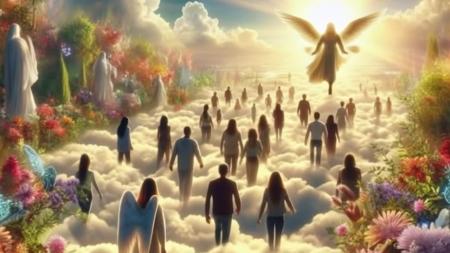
One day every people group will stand together before Christ.
Revelation 7:9
“A great multitude… of all nations, and kindreds, and people, and tongues.”
Different nations. Different languages. Different appearances.
But one human family.
And one Savior.
Jesus Christ came to redeem people from every nation on earth.
What began as one family in Genesis will one day stand together again before the throne of God.
✠SGT Dinah Scivoletti✠
✠Joan of Arc Priory✠
✠✠Act and God will Act (Actus et Deus Act)✠✠
❖ Revelation 19:10
“The testimony of Jesus is the spirit of prophecy.”
❖ Acts 20:27
“For I did not shrink from declaring to you the whole counsel of God.”
Nearly one-third of the Bible is prophecy.
When churches neglect it, they are not declaring the whole counsel of God.✠SGT Dinah Scivoletti✠
✠Joan of Arc Priory✠
✠✠Act and God will Act (Actus et Deus Act)✠✠
... more❖ Revelation 19:10
“The testimony of Jesus is the spirit of prophecy.”
❖ Acts 20:27
“For I did not shrink from declaring to you the whole counsel of God.”
Nearly one-third of the Bible is prophecy.
When churches neglect it, they are not declaring the whole counsel of God.
✠SGT Dinah Scivoletti✠
✠Joan of Arc Priory✠
✠✠Act and God will Act (Actus et Deus Act)✠✠
The Cosmic Conflict: A Study of Revelation Chapter 12
Revelation Chapter 12 provides a "behind-the-scenes" look at the spiritual warfare that fuels the earthly chaos of the Tribulation. While previous chapters focused on the horizontal perspective—the seals and trumpets breaking upon the earth—this chapter pulls back the veil to reveal the vertical perspective: a prehistoric and prophetic war between the Kingdom of God and the powers of darkness.
Through three vivid "signs," the Holy Spirit ex... moreThe Cosmic Conflict: A Study of Revelation Chapter 12
Revelation Chapter 12 provides a "behind-the-scenes" look at the spiritual warfare that fuels the earthly chaos of the Tribulation. While previous chapters focused on the horizontal perspective—the seals and trumpets breaking upon the earth—this chapter pulls back the veil to reveal the vertical perspective: a prehistoric and prophetic war between the Kingdom of God and the powers of darkness.
Through three vivid "signs," the Holy Spirit explains the root of Satan's hatred for Israel, his failed attempt to destroy the Messiah, and his final, desperate assault on the people of God.
The First Sign: The Woman Clothed with the Sun (12:1–2)
John beholds a "great wonder" in heaven: a woman clothed with the sun, the moon under her feet, and a crown of twelve stars. This imagery is not random; it is a direct biblical allusion to Joseph’s dream in Genesis 37, where the sun, moon, and eleven stars represented Jacob, Rachel, and the tribes of Israel.
• Identity: The woman represents the nation of Israel. She is not the Church, the prophecy encompasses the national history of Israel).
• The Travail: She is in labor, crying out in birth pangs. This represents the centuries of Israel’s history—the "travail" of a nation waiting through prophecy, persecution, and exile for the promised "Seed of the Woman" who would crush the serpent’s head.
The Second Sign: The Great Red Dragon (12:3–4)
A second sign appears: a "great red dragon" with seven heads, ten horns, and seven crowns. The text leaves no room for guesswork regarding his identity—verse 9 explicitly names him as "that old serpent, called the Devil, and Satan."
• The Fallen Host: His tail draws a "third part of the stars of heaven" and casts them to the earth. This is widely understood as the original rebellion of Satan, where one-third of the angelic host followed him in his fall from glory.
• The Ambush: The dragon stands before the woman, ready to "devour her child as soon as it was born." From Pharaoh’s decree to kill Hebrew infants to Haman’s plot in Persia and Herod’s massacre in Bethlehem, history is a record of the Dragon trying to sever the Messianic line before the Savior could reach the Cross.
The Third Sign: The Male Child (12:5)
The woman brings forth a "man child" destined to rule all nations with a rod of iron. This is a direct quote from Psalm 2, the quintessential Messianic coronation psalm.
• The Identity: The child is Jesus Christ.
• The Ascension: The verse moves rapidly from His birth to His being "caught up unto God, and to his throne." This bypasses His earthly ministry and focuses on the fact that Satan’s attempt to "devour" Him failed. Through the Resurrection and Ascension, Christ is now seated in the place of total authority, far beyond the Dragon’s reach.
The War in Heaven (12:7–12)
The narrative then shifts to a future event: a celestial battle. Michael, the archangel assigned as the special protector of Israel (Daniel 12:1), leads the heavenly armies against the Dragon.
• The Expulsion: Satan and his angels lose their place in heaven. Since his fall, Satan has had access to the heavenly courts as the "Accuser of the brethren" (as seen in the Book of Job). At this midpoint of the Tribulation, that access is permanently revoked. He is cast down to the earth.
• The Key to Victory: A loud voice in heaven proclaims how believers overcome this defeated foe: "By the blood of the Lamb, and by the word of their testimony; and they loved not their lives unto the death." Our victory is not based on our strength, but on Christ's finished work and our unwavering allegiance to Him, even in the face of martyrdom.
The Flight into the Wilderness (12:6, 13–17)
Once Satan is confined to the earth and realizes his time is short (three and a half years), he redirects his fury toward the woman (Israel) who brought forth the Messiah.
• Divine Protection: Israel is given "two wings of a great eagle" to fly into a place of protection in the wilderness for 1,260 days (3.5 years). This mirrors the "time, times, and half a time" of Daniel’s prophecy. Just as God carried Israel out of Egypt on "eagles' wings," He will supernaturally preserve a remnant during the Great Tribulation.
• The Flood and the Earth: Satan attempts to destroy her with a "flood" (often interpreted as a massive pursuing army), but the "earth helps the woman" by swallowing the flood. God uses natural or providential means to thwart the Dragon’s military campaigns.
• War Against the Remnant: Frustrated by his inability to annihilate Israel, the Dragon turns his rage toward the "remnant of her seed"—those who come to faith in Christ during the Tribulation (both Jews and Gentiles). These believers become the primary targets of the Antichrist's state-sponsored terror.
Theological Significance
Chapter 12 provides the "Why" behind the "What" of the Tribulation.
1. Antisemitism is Satanic: The Dragon’s hatred for the Jewish people is rooted in their role as the vessel for the Messiah and God’s future kingdom promises.
2. Satan is a Defeated Usurper: He has already failed to stop the birth of Christ and he will fail to stop the preservation of Israel.
3. The Sovereignty of Timing: Satan’s wrath is great specifically because he knows his time is limited. Every act of evil in the second half of the Tribulation is the thrashing of a dying serpent.
✠SGT Dinah Scivoletti✠
✠Joan of Arc Priory✠
✠✠Act and God will Act (Actus et Deus Act)✠✠
🌍 The story of Israel is not finished.
For thousands of years nations have risen and fallen, empires have tried to erase Israel, and many today still question whether the Jewish people have any place in God’s plan. Yet the Bible speaks clearly: God has not cast away His people. What we see today is not the end of the story but part of a prophetic timeline unfolding exactly as Scripture said it would.
The Apostle Paul addressed this very issue in Romans chapter 11, warning believers not to misu... more🌍 The story of Israel is not finished.
For thousands of years nations have risen and fallen, empires have tried to erase Israel, and many today still question whether the Jewish people have any place in God’s plan. Yet the Bible speaks clearly: God has not cast away His people. What we see today is not the end of the story but part of a prophetic timeline unfolding exactly as Scripture said it would.
The Apostle Paul addressed this very issue in Romans chapter 11, warning believers not to misunderstand what God is doing.
God Has Not Rejected Israel
Many people assume that because Israel rejected Jesus at His first coming, God permanently rejected Israel. But the Bible says the opposite.
Romans 11:1–2 (KJV)
“I say then, Hath God cast away his people? God forbid. For I also am an Israelite… God hath not cast away his people which he foreknew.”
Paul answers the question directly: God forbid.
Israel’s rejection of their Messiah did not cancel God’s covenant promises. God’s faithfulness does not depend on human faithfulness. What He promised to Abraham, Isaac, and Jacob will still be fulfilled.
This is why Paul reminds Gentile believers not to boast or think they replaced Israel.
Romans 11:18 (KJV)
“Boast not against the branches.”
God’s plan for Israel is not finished — it is unfolding.
Israel’s Blindness Is Temporary
Romans 11 explains something remarkable: Israel’s spiritual blindness is not permanent.
Romans 11:25 (KJV)
“…blindness in part is happened to Israel, until the fulness of the Gentiles be come in.”
Notice two important truths in this verse:
✨ The blindness is partial (“in part”).
✨ The blindness is temporary (“until”).
During this present time, the gospel is going to the Gentiles across the world. This is the period we live in today — the Church Age.
But the Bible says a day is coming when that blindness will be lifted.
Israel Will One Day Recognize Their Messiah
The prophets spoke of a future moment when the nation of Israel will finally recognize the One they rejected.
Zechariah 12:10 (KJV)
“And they shall look upon me whom they have pierced, and they shall mourn for him…”
This prophecy describes a powerful national awakening when Israel sees Jesus as their Messiah.
It will not be a small moment of private belief. It will be a profound realization that the One they pierced is the true King.
Paul confirms this future restoration in Romans.
Romans 11:26 (KJV)
“And so all Israel shall be saved.”
This does not mean every Jewish person throughout history is automatically saved. It means that a future generation of Israel will turn to their Messiah when God completes His prophetic work.
God’s Promises to Israel Cannot Fail
One of the greatest lessons Romans 11 teaches is that God keeps His promises.
If God abandoned Israel, it would mean His covenant promises could fail. But Scripture declares that God’s word stands forever.
The prophet Jeremiah spoke about this certainty.
Jeremiah 31:35–37 (KJV)
God says that if the sun, moon, and stars disappear, then Israel would cease from being a nation before Him.
In other words:
As long as the universe exists, God’s covenant with Israel stands.
A Warning for the World
Romans 11 is not only about Israel — it is also a warning.
Gentile believers are reminded not to become proud or arrogant toward Israel.
God’s plan includes both Jews and Gentiles, but each according to His purpose.
The same God who preserved Israel through exile, persecution, and dispersion is the same God guiding history today.
What we see happening in the world should remind us that God’s prophetic clock is still moving.
The Most Important Question
Understanding prophecy is important, but the most important question is personal:
Have you trusted Christ?
The Bible tells us the gospel clearly.
1 Corinthians 15:1–4 (KJV) declares the gospel by which we are saved:
Christ died for our sins.
He was buried.
He rose again the third day.
Salvation is not earned by works, religion, or human effort. It comes when a person believes the finished work of Jesus Christ — trusting that His death and resurrection paid the full price for sin.
When you believe the gospel, you receive forgiveness, eternal life, and a new standing before God.
Israel’s story reminds us that God keeps His promises. What He said centuries ago is still unfolding today.
History is not random. God is guiding it toward the fulfillment of His Word.
And one day, the King whom Israel pierced will return — and the world will finally see that every promise of God was true.
🙏 What do you think?
Do you believe Israel still has a future in God’s prophetic plan?
✠SGT Dinah Scivoletti✠
✠Joan of Arc Priory✠
✠✠Act and God will Act (Actus et Deus Act)✠✠
The Measuring Rod and the Two Witnesses: A Study of Revelation Chapter 11
Revelation Chapter 11 serves as a bridge between the trumpet judgments and the final transition of world power. In the previous chapter, John was told he must "prophesy again," and here the content of that prophecy begins to manifest in the very heart of the holy city, Jerusalem. This chapter captures the collision between the kingdom of man and the kingdom of God, featuring supernatural ministry, temporary martyrdom, and... moreThe Measuring Rod and the Two Witnesses: A Study of Revelation Chapter 11
Revelation Chapter 11 serves as a bridge between the trumpet judgments and the final transition of world power. In the previous chapter, John was told he must "prophesy again," and here the content of that prophecy begins to manifest in the very heart of the holy city, Jerusalem. This chapter captures the collision between the kingdom of man and the kingdom of God, featuring supernatural ministry, temporary martyrdom, and a heavenly coronation.
The Measuring of the Temple (11:1–2)
John is handed a reed like a measuring rod and told to perform a symbolic act: he is to measure the temple of God, the altar, and the worshippers. In biblical prophecy, "measuring" signifies divine ownership and assessment. God is marking out what is His, signaling that despite the surrounding chaos, He has not forgotten His covenant dwelling place.
However, John is told to exclude the outer court, for it has been given over to the Gentiles to tread underfoot for forty-two months. This period—equivalent to three and a half years—aligns with the "Great Tribulation" or the second half of Daniel’s 70th Week. This passage confirms that a literal temple will once again stand in Jerusalem during this time, serving as a focal point for the final spiritual conflict between the Antichrist and the true God.
The Two Witnesses: Fire and Prophecy (11:3–6)
In the midst of this spiritual occupation, God raises up two "witnesses" to whom He gives supernatural power. They are dressed in sackcloth, signifying a message of mourning and repentance. For 1,260 days (the same three-and-a-half-year period), they stand as the light of truth in a world shrouded in deception.
John describes them as "two olive trees and two lampstands." This imagery, rooted in the book of Zechariah, points to individuals empowered by the Holy Spirit to accomplish an impossible task. Their authority is immense:
• They are divinely protected; if anyone seeks to harm them, fire proceeds from their mouths to consume their enemies.
• They have power over the elements, shutting the heavens so it does not rain, turning water into blood, and striking the earth with plagues at will.
Because their miracles mirror those of Moses (turning water to blood/plagues) and Elijah (calling down fire/stopping rain), many believe these are the literal prophets of old returned to fulfill a final mission. Others suggest they are Elijah and Enoch, the two men in history who never saw death. Regardless of their names, they represent God’s refusal to leave the world without a witness.
Martyrdom, Mockery, and Miracle (11:7–13)
When their testimony is finished—and not a moment before—God allows the "beast that ascends out of the bottomless pit" (the Antichrist) to make war against them. This is the first mention of the Beast in Revelation, and he is permitted to overcome and kill the two prophets.
The world’s reaction is a staggering display of depravity. The bodies of the witnesses are left in the streets of Jerusalem, which is spiritually likened to Sodom and Egypt. For three and a half days, the inhabitants of the earth watch their remains. Rather than mourning, the world throws a global party, sending gifts to one another in celebration of the deaths of these "tormentors." The truth was so painful to their consciences that they treated its silencing as a holiday.
But the celebration is cut short. After three and a half days, the "breath of life from God" enters them, and they stand to their feet. In full view of their terrified enemies, a voice from heaven cries, "Come up hither," and they ascend in a cloud. Immediately, a great earthquake strikes Jerusalem, destroying a tenth of the city and killing seven thousand people. For a brief moment, the survivors are struck with the fear of God.
The Seventh Trumpet: The Kingdom Proclaimed (11:14–19)
With the second woe past, the seventh angel sounds his trumpet. This trumpet is unique; it does not introduce a specific plague like the others, but rather a cosmic decree. Loud voices in heaven announce:
"The kingdoms of this world are become the kingdoms of our Lord, and of his Christ; and he shall reign for ever and ever."
The twenty-four elders fall on their faces, worshiping the God who has "taken His great power" to reign. They acknowledge that while the nations are angry, the time has come for judgment and reward. The seventh trumpet serves as the formal "legal" transfer of power; though the final bowls of wrath are yet to be poured out, the victory is now declared as an accomplished fact.
The chapter closes with the opening of the temple of God in heaven. The Ark of His Testament is seen—a powerful reminder of God’s unbreakable faithfulness to His promises. The vision ends with lightning, voices, thunderings, and great hail, signaling that the final phase of the world’s reclamation has begun.
Theological Significance
• The Witness Remains: No matter how dark the age, God provides a voice for Truth.
• The World’s Hatred: Truth is a "torment" to those who love their sin.
• God’s Vindication: The world may celebrate the "death" of truth, but God always has the final word through resurrection.
• The Certainty of Christ’s Reign: The seventh trumpet ensures that the usurper’s time is over. The King is coming to claim His own.
✠SGT Dinah Scivoletti✠
✠Joan of Arc Priory✠
✠✠Act and God will Act (Actus et Deus Act)✠✠
The Angel of the Covenant: A Study of Revelation Chapter 10
As we reach Chapter 10, the chronological sequence of the trumpet judgments is momentarily suspended. Just as Chapter 7 provided a "parenthetical" look at the redeemed before the seventh seal was broken, Chapter 10 serves as a divine interlude between the sixth and seventh trumpets.
This section, which extends into the middle of Chapter 11, is designed to shift our focus. We move from the direct execution of judgment to the broader pr... moreThe Angel of the Covenant: A Study of Revelation Chapter 10
As we reach Chapter 10, the chronological sequence of the trumpet judgments is momentarily suspended. Just as Chapter 7 provided a "parenthetical" look at the redeemed before the seventh seal was broken, Chapter 10 serves as a divine interlude between the sixth and seventh trumpets.
This section, which extends into the middle of Chapter 11, is designed to shift our focus. We move from the direct execution of judgment to the broader prophetic authority behind these events. Here, John is given a renewed commission and a solemn reminder that the "mystery of God" is nearing its final consummation.
The Vision of the Mighty Angel (10:1–3)
John sees "another mighty angel" descending from heaven, and the description is nothing short of majestic. He is clothed with a cloud, a rainbow encircles his head, his face shines like the sun, and his feet resemble pillars of fire.
In a literal-futurist framework, there is a strong argument that this is not a mere created angel, but a Christophany—an appearance of the Lord Jesus Christ in angelic form. The imagery parallels the vision of Christ in Chapter 1:
• The Rainbow signifies the Noahic and throne-room covenants, marking Him as the God of promise.
• The Sun-like face and Fiery feet mirror the description of the Son of Man in the opening chapter.
• His Lion-like roar points directly to the "Lion of the tribe of Judah."
Whether this is Christ Himself or a high-ranking representative acting with His full delegated authority, the message is the same: the Sovereign of Heaven is now asserting His legal claim over the physical world.
The Little Book and Universal Authority (10:2, 8–11)
The angel holds a "little book" that is already open. He places his right foot on the sea and his left foot on the earth—a posture of legal possession. He is claiming the entire globe as His territory.
The Identity of the Little Book Many scholars identify this "little book" as the same scroll from Chapter 5. In Chapter 5, the scroll was sealed; through Chapters 6–9, the seals were broken. Now, in Chapter 10, the scroll is open. It contains the remaining "bitter" judgments and the final details concerning Israel and the nations that must be fulfilled before the Kingdom is established.
The Experience of Eating the Word In a symbolic act mirrored by the prophets Ezekiel and Jeremiah, John is told to take the book and eat it.
• In his mouth, it is sweet as honey. It is a privilege to receive the Word of God and to know the end of the story.
• In his stomach, it becomes bitter. This represents the digestive reality of prophecy. Once the truth is internalized, the prophet feels the weight of the coming woe, the reality of the slaughter, and the terrible necessity of God’s wrath.
The Seven Thunders (10:3–4)
When the angel cries out, seven thunders utter their voices. John prepares to record their message, but a voice from heaven commands him: "Seal up those things which the seven thunders uttered, and write them not."
This is a rare moment in the apocalypse where information is intentionally withheld. It serves as a reminder that while God has revealed much, there are "secret things" that belong only to Him. Speculation regarding the thunders is fruitless; they represent a part of God's sovereign plan that remains hidden from human understanding.
The End of Delay: The Mystery Finished (10:5–7)
The angel lifts his hand to heaven and swears by the Creator that "there should be time no longer." This does not mean that time as a dimension ceases, but rather that there will be no more delay.
He announces that when the seventh trumpet sounds, the "mystery of God" will be finished. A "mystery" in the New Testament is a truth previously hidden but now fully disclosed. This completion likely refers to the final stage of the cosmic conflict—specifically the casting down of Satan and the visible transition of earthly government into the hands of Christ. The long-awaited promises made to the Old Testament prophets are finally at the doorstep of fulfillment.
John’s Renewed Commission (10:11)
The chapter concludes with a charge to John: "Thou must prophesy again before many peoples, nations, tongues, and kings." This indicates that the "little book" contains the content for the remaining chapters of Revelation. John is not finished; he is being re-commissioned to describe the final, most intense half of the Tribulation. The vision transitions from global disasters to the specific characters and conflicts of the "Great Tribulation," including the Antichrist, the False Prophet, and the two witnesses.
Theological Significance
Chapter 10 provides the "legal" backdrop for the end of the age. It reminds us that:
1. God’s Claim is Total: Sea and land alike belong to Him.
2. Prophecy is Bittersweet: We rejoice in God’s victory but weep for the judgment of the lost.
3. The Clock is Ticking: The "delay" is almost over. We are moving from the "beginning of sorrows" into the final, decisive climax of history.
The interlude continues in Chapter 11, where we see the measuring of the Temple and the ministry of the two supernatural witnesses.
✠SGT Dinah Scivoletti✠
✠Joan of Arc Priory✠
✠✠Act and God will Act (Actus et Deus Act)✠✠
The Abyss Unlocked: A Study of Revelation Chapter 9
As the fifth and sixth trumpets sound, the Book of Revelation enters its most terrifying phase yet. While the earlier judgments devastated the physical environment, Chapter 9 describes a shift toward the direct, supernatural torment and slaughter of humanity. These events represent the first two of the "Three Woes" heralded in the previous chapter, signaling that the restraint on the demonic realm has been partially lifted by divine decree.
T... moreThe Abyss Unlocked: A Study of Revelation Chapter 9
As the fifth and sixth trumpets sound, the Book of Revelation enters its most terrifying phase yet. While the earlier judgments devastated the physical environment, Chapter 9 describes a shift toward the direct, supernatural torment and slaughter of humanity. These events represent the first two of the "Three Woes" heralded in the previous chapter, signaling that the restraint on the demonic realm has been partially lifted by divine decree.
The Fifth Trumpet: The First Woe (9:1–12)
The Star and the Key
When the fifth angel sounds, John sees a "star" that had fallen from heaven to earth. This is clearly an intelligent being rather than a celestial object, as he is given a key to the "bottomless pit" (the Abyss). Whether this figure is a fallen angel, Satan himself, or a holy angel executing God’s will, the theological point remains: the authority to open the prison of demons is delegated by God. He alone holds ultimate sovereignty over the gates of hell.
The Opening of the Abyss
As the pit is opened, a smoke so dense it darkens the sun and the air rises like the exhaust of a great furnace. Out of this spiritual gloom emerges a nightmare: an army of demon locusts. These are not biological insects; they are supernatural entities confined in the Abyss until this precise moment in history.
The Torment of the Locusts
The mission of these creatures is highly specific. They are forbidden from harming the grass or trees—the usual diet of locusts—and are commanded to target only those people who do not have the seal of God on their foreheads. This identifies the 144,000 as exempt from this particular horror.
The torment they inflict is not lethal, but excruciating, likened to the sting of a scorpion. For five months, the pain is so pervasive that humanity will "seek death and shall not find it." This is a chilling reversal of the natural order—the desire for the grave becomes a luxury that is temporarily denied.
The Appearance and the King
John describes these beings with composite imagery: they have faces like men, hair like women, teeth like lions, and breastplates of iron. The sound of their wings is like the thundering of many chariots rushing to battle. While some modern interpreters attempt to identify these as military technology like helicopters, a literal-futurist view recognizes them as actual demonic entities whose appearance is intended to convey power, ferocity, and supernatural origin.
Unlike natural locusts, which have no leader, this army has a king: Abaddon (Hebrew) or Apollyon (Greek). Both names mean "The Destroyer." This powerful fallen prince leads the swarm in its mission to break the spirit of a rebellious world.
The Sixth Trumpet: The Second Woe (9:13–21)
The Angels of the Euphrates
The sixth trumpet sounds, and a voice from the golden altar of God commands the release of four angels bound at the river Euphrates. The fact that they are "bound" identifies them as fallen spirits of immense power, held in check for a specific hour, day, month, and year. Their release marks the transition from torment to extermination.
The Two Hundred Million
The army released by these angels is staggering in size: two hundred million. John hears the number explicitly. This demonic cavalry rides creatures that breathe fire, smoke, and brimstone. Their power to kill is found in their mouths and their serpent-like tails.
Through these three "plagues"—fire, smoke, and brimstone—one-third of mankind is killed. This represents a catastrophic loss of life, far exceeding the fourth seal's destruction. By this point in the Tribulation, more than half of the world's original population has perished.
The Mystery of the Unrepentant Heart
Perhaps the most tragic portion of Chapter 9 is its conclusion. After witnessing the opening of the Abyss, enduring five months of scorpion-like stings, and seeing a third of the population slaughtered by a demonic army, the survivors still refuse to repent.
The text lists a "menu of rebellion": they continue in the worship of demons and idols, and they refuse to turn from their murders, sorceries (Greek: pharmakeia), sexual immorality, and thefts. This reveals a fundamental truth about human nature: judgment alone does not change a heart. Without a surrender to the grace of God, humanity will continue to cling to its idols even as the world crumbles around them.
Theological Takeaways
• Divine Sovereignty: Even the most terrifying demonic forces act only under the "given" authority and timing of God.
• The Reality of the Spiritual Conflict: The Tribulation is not merely a political or environmental crisis; it is a literal invasion of the physical world by the forces of darkness.
• The Hardness of Sin: Chapter 9 stands as a testament to the depth of human depravity. Fear and pain are powerful, but they are not the same as repentance.
✠SGT Dinah Scivoletti✠
✠Joan of Arc Priory✠
✠✠Act and God will Act (Actus et Deus Act)✠✠
The Silence and the Storm:
As we open Chapter 8, we reach a pivotal intersection in the apocalypse. The sequence of the seven seals, which began in Chapter 6, now reaches its grand finale. Yet, the seventh seal does not bring an end to the story; rather, it acts as a gateway, ushering in a new and more intense series of divine interventions: The Seven Trumpet Judgments.
The Seventh Seal: Silence in Heaven (8:1)
When the Lamb opens the seventh seal, the expected roar of judgment is met with s... moreThe Silence and the Storm:
As we open Chapter 8, we reach a pivotal intersection in the apocalypse. The sequence of the seven seals, which began in Chapter 6, now reaches its grand finale. Yet, the seventh seal does not bring an end to the story; rather, it acts as a gateway, ushering in a new and more intense series of divine interventions: The Seven Trumpet Judgments.
The Seventh Seal: Silence in Heaven (8:1)
When the Lamb opens the seventh seal, the expected roar of judgment is met with something startling: silence. For approximately half an hour, the celestial songs of the elders and the cries of the living creatures cease.
This is a literal, staggering silence. In a futurist framework, this is the "calm before the storm." It is the universe holding its breath in solemn anticipation. Throughout the Old Testament, silence often signals the terrifying approach of God’s personal intervention (Habakkuk 2:20; Zephaniah 1:7). Heaven is pausing to acknowledge the gravity of what is about to be unleashed upon a rebellious earth.
The Seven Trumpet Angels (8:2)
Out of this heavy silence, John sees seven specific angels standing before God. While various traditions suggest these are high-ranking archangels—perhaps Gabriel or Michael—the text simply identifies them by their station. To these seven, seven trumpets are given. In biblical history, trumpets were used to assemble the people, to sound the alarm for war, or to announce the arrival of a King. Here, they signal the alarm for a world under siege by its Creator.
The Priestly Angel and the Power of Prayer (8:3–5)
Before a single trumpet is blown, another angel appears at the golden altar in heaven, holding a golden censer. He offers incense along with the prayers of all the saints.
There is significant discussion as to whether this angel is a high-ranking created being or a representation of Christ in His High Priestly role. Given that the Epistle to the Hebrews identifies Christ as our great intercessor, the imagery fits perfectly. Regardless, the central truth is profound: the judgments of the Great Tribulation are, in part, an answer to the prayers of God’s people.
The angel then fills the censer with fire from the altar and casts it to the earth. The result is immediate: voices, thundering, lightning, and an earthquake. This signifies that the "smoke" of prayer has become the "fire" of judgment. God is finally acting on behalf of His persecuted children.
The First Four Trumpets: The Assault on Creation (8:7–12)
A striking pattern emerges in the first four trumpets. Much like the plagues of the Exodus, these judgments systematically strike the natural world, affecting the very domains—earth, sea, rivers, and heavens—that were briefly protected in Chapter 7.
• The First Trumpet (Vegetation): Hail and fire mingled with blood are cast upon the earth. One-third of the trees and all green grass are burned up. This is a literal, ecological catastrophe that would devastate the world's oxygen supply and food chain.
• The Second Trumpet (The Sea): A "great mountain" burning with fire is cast into the sea. Many modern readers see this as a massive meteor or asteroid impact. The consequence is staggering: one-third of the sea becomes blood, one-third of marine life dies, and one-third of the world’s shipping fleet is destroyed.
• The Third Trumpet (Fresh Water): A blazing star called Wormwood falls from heaven, poisoning one-third of the rivers and springs. This reverses the miracle at Marah (Exodus 15), turning life-giving water into a bitter, lethal poison.
• The Fourth Trumpet (The Heavens): One-third of the sun, moon, and stars are "smitten." Light is reduced by a third, plunging the world into an eerie, prolonged darkness that disrupts the natural cycles of day and night.
The Sequence of Judgment
A key interpretive question arises here: Are the trumpets inside the seventh seal? While some see them as "nested" (the seventh seal containing the trumpets), a straightforward sequential reading suggests they are distinct, consecutive events. John sees the seals completed, then the trumpets prepared, and later the vials (bowls). This reflects a chronological escalation—a forward movement where each series of judgments grows in intensity and specificity.
The Three Woes (8:13)
As the fourth trumpet fades, an angel (or eagle, in some manuscripts) flies through the midst of heaven, crying: "Woe, woe, woe, to the inhabiters of the earth!"
This is a terrifying warning. While the first four trumpets devastated the environment, the final three trumpets—the "Three Woes"—will target humanity directly. The worst is yet to come: demonic torment, a massive supernatural cavalry, and the final transition of the kingdoms of this world back to Christ.
Summary
Chapter 8 moves the Tribulation from global instability to cosmic deconstruction. We see:
• The solemn silence that precedes divine wrath.
• The priesthood of prayer triggering the fire of judgment.
• The systematic collapse of earth's natural systems.
• The escalation of severity as the "Woes" are announced.
The pattern of Revelation is one of increasing pressure. The seals broke the peace; the trumpets now break the planet.
✠SGT Dinah Scivoletti✠
✠Joan of Arc Priory✠
✠✠Act and God will Act (Actus et Deus Act)✠✠
The Divine Pause: A Study of Revelation Chapter 7
Between the breaking of the sixth and seventh seals, the chronological narrative of judgment momentarily halts. Chapter 6 ended with a terrifying question from a trembling world: "For the great day of his wrath is come; and who shall be able to stand?" Chapter 7 serves as a divine parenthetical, an explanatory vision inserted by the Spirit to answer that very question. Before the Seventh Seal unleashes the next wave of escalation, Heaven reveals... moreThe Divine Pause: A Study of Revelation Chapter 7
Between the breaking of the sixth and seventh seals, the chronological narrative of judgment momentarily halts. Chapter 6 ended with a terrifying question from a trembling world: "For the great day of his wrath is come; and who shall be able to stand?" Chapter 7 serves as a divine parenthetical, an explanatory vision inserted by the Spirit to answer that very question. Before the Seventh Seal unleashes the next wave of escalation, Heaven reveals that even in the midst of global upheaval, God is busy marking, protecting, and redeeming His own. Two distinct companies are shown to "stand" before the Lord.
I. The Sealing of the 144,000 (7:1–8)
The vision begins with a scene of restrained power. John sees four angels standing at the "four corners" of the earth, holding back the winds of judgment. A fifth angel ascends from the east, carrying the seal of the living God. The command is clear: no further destruction can be released upon the earth, the sea, or the trees until the servants of God are sealed in their foreheads.
The Identity of the Sealed John hears the specific number of those sealed: 144,000, comprised of 12,000 individuals from each of the twelve tribes of Israel. The list includes Judah, Reuben, Gad, Asher, Naphtali, Manasseh, Simeon, Levi, Issachar, Zebulun, Joseph, and Benjamin.
In a literal, futurist framework, this is understood as a literal Jewish remnant. These are ethnic Israelites who are supernaturally protected after the Church has been raptured. They are marked for preservation through the coming trumpet judgments.
It is noteworthy that the tribe of Dan is omitted from this list, while Ephraim is likely represented under the name of Joseph. In biblical history, both tribes were heavily associated with the introduction of idolatry into Israel, and their omission here may signify a specific judicial pruning of the tribal rolls during this final period of testing.
The Nature of the Seal While some interpret this seal as purely spiritual, a literal reading suggests a visible mark of ownership. Just as the "Mark of the Beast" in Chapter 13 is a literal requirement for commerce, God’s seal is a literal mark of allegiance. This is supported by Chapter 9:4, where demonic "locusts" are commanded not to harm those who have the seal of God on their foreheads. The seal signifies that these 144,000 are God’s "special forces"—divinely commissioned and physically preserved witnesses in a rebellious world.
II. The Great Multitude (7:9–17)
Immediately after hearing the census of the 144,000, John’s vision expands. He sees an innumerable multitude from every nation, kindred, people, and tongue. Unlike the first group, which was numbered and specifically Israelite, this group is universal and countless. They stand before the throne clothed in white robes, holding palm branches, and crying, "Salvation to our God... and unto the Lamb."
The Great Tribulation Saints When asked who these people are, the elder explains: "These are they which came out of great tribulation, and have washed their robes, and made them white in the blood of the Lamb."
There is a significant interpretive discussion regarding the relationship between the two groups. Many see them as two separate companies: the 144,000 being a protected Jewish remnant on earth, and the great multitude being the martyred saints of all nations who have arrived in heaven. Others suggest they are the same group viewed from different perspectives—John first "hears" the census of Israel, but then "sees" the global, spiritual reality of the redeemed.
Regardless of the structural distinction, the theological message is identical. These individuals are not part of the Church Age; they are those who turn to Christ during the Tribulation. They represent the greatest harvest of souls in human history, occurring during the world's darkest hour.
The Pastoral Comfort of Chapter 7
Chapter 7 provides a profound shift in tone. While Chapter 6 focused on the "Wrath of the Lamb," Chapter 7 focuses on the Shepherding of the Lamb.
The passage concludes with a beautiful description of the heavenly state for these redeemed sufferers. They serve God day and night in His temple, and "He that sitteth on the throne shall dwell among them." They shall no longer hunger or thirst, nor shall the sun strike them with heat.
The most moving promise is found in the final verse: "The Lamb which is in the midst of the throne shall feed them, and shall lead them unto living fountains of waters: and God shall wipe away all tears from their eyes."
Theological Significance
The placement of this chapter proves that judgment never moves forward without mercy being marked. Before the Seventh Seal is broken—which will launch the terrifying Trumpet judgments—God pauses the narrative to show John (and us) that His grace is still active.
• God Marks: He knows exactly who belongs to Him.
• God Preserves: He can protect His servants in the midst of fire.
• God Redeems: The blood of the Lamb is sufficient even for those who missed the Rapture but find faith in the fire.
• God Shepherds: The same Lamb who breaks the seals of judgment is the Shepherd who wipes away the tears of the suffering.
The question of "Who can stand?" has been answered. It is not the strong, the rich, or the mighty who stand; it is the sealed and the washed.
✠SGT Dinah Scivoletti✠
✠Joan of Arc Priory✠
✠✠Act and God will Act (Actus et Deus Act)✠✠
The Breaking of the Seals: A Study of Revelation Chapter 6
As we enter Chapter 6, the heavenly worship of the previous chapters gives way to earthly execution. It is vital to remember that the events described here are not random disasters or mere "bad luck" in history. They are judicial actions flowing directly from the throne of God and executed by the Lamb.
The scroll—the title deed to the earth—is now being opened. Everything that unfolds in the coming chapters happens because the Lamb has... moreThe Breaking of the Seals: A Study of Revelation Chapter 6
As we enter Chapter 6, the heavenly worship of the previous chapters gives way to earthly execution. It is vital to remember that the events described here are not random disasters or mere "bad luck" in history. They are judicial actions flowing directly from the throne of God and executed by the Lamb.
The scroll—the title deed to the earth—is now being opened. Everything that unfolds in the coming chapters happens because the Lamb has the authority to break the seals.
The First Seal: The Rider on the White Horse (6:1–2)
When the Lamb opens the first seal, one of the four living creatures thunders, "Come!" In response, a rider appears on a white horse.
While many throughout history have mistaken this rider for Christ, the context reveals a counterfeit king. When Christ returns on a white horse in Chapter 19, He is followed by the armies of heaven and wields a sharp sword. This rider, however, carries a bow without arrows and has a crown "given" to him.
This is the Antichrist. He emerges at the beginning of the final seven-year period (Daniel’s 70th Week) not through open bloodshed, but through diplomacy and deception. He goes forth "conquering and to conquer," likely through the false peace and the covenant mentioned in Daniel 9:27. The world, desperate for stability, will embrace this imitation savior before realizing his true nature.
The Second Seal: The Red Horse of War (6:3–4)
The illusion of the first seal is short-lived. As the Lamb opens the second seal, a red horse appears. Its rider is granted the power to take peace from the earth.
If the white horse represented deceptive diplomacy, the red horse represents global conflict. The "great sword" given to the rider signifies systemic warfare and civil unrest on an unprecedented scale. This is the natural and judicial consequence of a world that rejects the Prince of Peace; it settles for a false peace that inevitably collapses into blood-red violence.
The Third Seal: The Black Horse of Famine (6:5–6)
War is almost always followed by the collapse of infrastructure and agriculture. When the third seal is broken, a black horse emerges. Its rider carries a pair of balances (scales), signifying strict rationing and economic collapse.
A voice proclaims: "A measure of wheat for a penny [a day's wage]..." This indicates a world where a man must work an entire day just to buy enough wheat for one meal. There is no surplus, no savings, and no security. Interestingly, the "oil and the wine" are not yet touched, suggesting that while the poor struggle for daily bread, certain luxuries remain—a hallmark of the economic inequality that characterizes the Antichrist's rising system.
The Fourth Seal: The Pale Horse of Death (6:7–8)
The fourth seal gathers the previous judgments into a terrifying climax. John sees a "pale" horse—the Greek word is chloros, describing the sickly, greenish-yellow hue of a corpse.
The rider is explicitly named Death, and Hades follows close behind. Death claims the physical body, while Hades receives the soul. They are given authority over one-fourth of the earth to kill by the sword, famine, pestilence, and even the "beasts of the earth." This represents a staggering loss of life—billions of people—marking the intensification of what Jesus called the "beginning of sorrows."
The Fifth Seal: The Cry of the Martyrs (6:9–11)
With the fifth seal, the scene shifts from the earth back to the heavenly altar. John sees the souls of those who were slain "for the word of God, and for the testimony which they held."
These are not Church-age saints (who were previously seen in the 24 elders), but those who turned to God after the Tribulation began and paid for their faith with their lives. They cry out for divine justice, asking, "How long, O Lord?"
They are given white robes—a sign of vindication—and told to rest a little longer until the full number of their fellow servants who are to be killed is complete. This reveals that persecution will only intensify as the week progresses.
The Sixth Seal: Cosmic Upheaval (6:12–17)
The sixth seal brings the first explicit realization to the inhabitants of the earth that they are facing the Wrath of the Lamb. This is not a man-made crisis; it is a cosmic disturbance.
• A great earthquake shakes the planet.
• The sun turns black and the moon turns to blood.
• Stars (meteors) fall to the earth and the sky recedes like a scroll.
The reaction of humanity is telling. From kings to bondmen, everyone hides in caves and among the rocks. They do not cry out for mercy or repentance; instead, they pray for the mountains to fall on them to hide them from the "face of him that sitteth on the throne." They finally recognize the source of the judgment, yet their hearts remain hardened in terror.
Theological Summary
The first six seals present a clear, sequential progression of the early Tribulation:
1. Deception: The rise of the Antichrist.
2. Division: Global warfare.
3. Deprivation: Economic collapse and famine.
4. Death: Mass mortality affecting 25% of the population.
5. Dissent: The martyrdom of those who follow Christ.
6. Dread: Unmistakable divine intervention and cosmic shaking.
While the first four seals may seem like "natural" consequences of human rebellion, they are nonetheless judicial, as it is the Lamb who initiates each one. We see a world that rejected the True King being given exactly what it asked for: a false savior, a violent world, and a collapsing creation.
The question asked at the end of the chapter—"Who shall be able to stand?"—hangs in the air, setting the stage for the sealing of the 144,000 in Chapter 7.
✠SGT Dinah Scivoletti✠
✠Joan of Arc Priory✠
✠✠Act and God will Act (Actus et Deus Act)✠✠
The Legal Claim to Creation: A Study of Revelation Chapter 5
In Revelation Chapter 4, we stood in awe of God the Creator upon His throne. But as we enter Chapter 5, a crisis emerges in the heavenly court. A document is produced, a search is conducted, and the destiny of the world hangs in the balance.
If Chapter 4 gave us the atmosphere of heaven, Chapter 5 gives us the action that sets the rest of the book in motion.
The Scroll in the Right Hand (5:1)
John sees a scroll in the right hand of... moreThe Legal Claim to Creation: A Study of Revelation Chapter 5
In Revelation Chapter 4, we stood in awe of God the Creator upon His throne. But as we enter Chapter 5, a crisis emerges in the heavenly court. A document is produced, a search is conducted, and the destiny of the world hangs in the balance.
If Chapter 4 gave us the atmosphere of heaven, Chapter 5 gives us the action that sets the rest of the book in motion.
The Scroll in the Right Hand (5:1)
John sees a scroll in the right hand of the Father. It is unique: written on both sides and secured with seven seals. In the ancient world, a document written on both sides and heavily sealed was often a Title Deed.
What is this scroll? It is the legal deed to the earth. Since the Fall in Eden, the earth has been under the "usurpation" of sin, death, and the "prince of this world." This scroll contains the legal process—the judgments and the reclamation—by which God will take back what is rightfully His. The seven seals ensure that the contents are perfectly secured until the rightful Heir appears.
The Crisis: "Who is Worthy?" (5:2–4)
A "strong angel" issues a challenge that echoes across the cosmos: "Who is worthy to open the book, and to loose the seals thereof?"
Notice the requirement is not strength, but worthiness.
• No man in heaven (the saints of old).
• No man on earth (the powerful of today).
• No man under the earth (the dead).
John begins to weep uncontrollably. Why? Because he understands the stakes. If no one is found worthy to open the scroll, the curse remains. Evil goes unpunished. The tears of the oppressed are never dried. Redemption remains an unfinished story, and creation is left in the hands of the usurper.
The Lion Who Is a Lamb (5:5–6)
One of the twenty-four elders comforts John: "Weep not: behold, the Lion of the tribe of Judah... hath prevailed to open the book."
John turns to see a Lion—the symbol of Messianic power and kingly authority (Genesis 49). But what he actually sees is a Lamb.
• It is a Lamb "as it had been slain." * It is standing (alive in resurrection), yet bearing the marks of sacrifice.
• He has seven horns (perfect power) and seven eyes (perfect omniscience).
This is the central paradox of the Gospel: Victory was achieved through sacrifice. The Lion of Judah "prevailed" not by a military coup, but by the shedding of His own blood. The throne of the universe is occupied by a Slain Lamb.
The Transfer of Authority (5:7–8)
The Lamb approaches the throne and takes the scroll from the right hand of the Father. This is a moment of monumental dispensational importance. It is the formal handover of the "Title Deed" to the One who bought it back at Calvary.
Immediately, heaven erupts. The living creatures and the elders fall down, holding harps and golden bowls full of incense, which the text identifies as the prayers of the saints. All the prayers for "Thy Kingdom come" are about to be answered.
The New Song of Redemption (5:9–10)
In Chapter 4, they sang of Creation. In Chapter 5, they sing a "new song" of Redemption:
"Thou art worthy... for thou wast slain, and hast redeemed us to God by thy blood out of every kindred, and tongue, and people, and nation."
The Lamb is worthy to judge the world because He was judged for the world. His right to execute the seals of judgment is rooted in His work on the Cross.
The Universal Chorus (5:11–14)
The worship expands in concentric circles:
1. The Four Living Creatures and Elders.
2. Millions of angels (ten thousand times ten thousand).
3. Every creature in the heavens, on the earth, and under the sea.
They give equal "blessing, and honour, and glory" to both Him on the throne and to the Lamb. This is one of the most powerful proofs of the Deity of Christ in the entire Bible. Only God can receive the worship described here.
Theological Significance
Chapter 5 teaches us that Redemption precedes Restoration. Before Christ cleanses the earth of sin (the Tribulation), He must first be recognized as the One who paid the price for the earth.
The judgments we are about to see in Chapter 6 are not random acts of divine anger. They are the legal execution of the scroll’s terms. The Lamb is breaking the seals to evict the usurper and claim His inheritance.
The stage is now set. The King has the scroll. The seals are ready to be broken.
✠SGT Dinah Scivoletti✠
✠Joan of Arc Priory✠
✠✠Act and God will Act (Actus et Deus Act)✠✠