An online article featured hilarious photos of children trying to play hide-and-seek. One boy was betrayed by his shadow. Another thought hiding under a blanket in the middle of the kitchen was the perfect spot. A third crawled beneath a rug, unawa... moreA daily devotional by Dr. David Jeremiah https://www.davidjeremiah.ca/magazine/daily-devotional
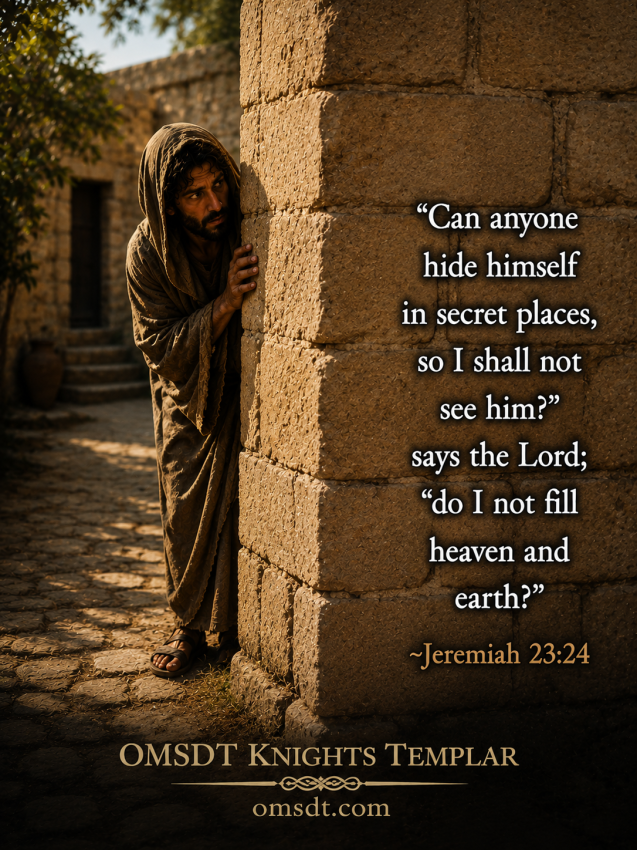
An online article featured hilarious photos of children trying to play hide-and-seek. One boy was betrayed by his shadow. Another thought hiding under a blanket in the middle of the kitchen was the perfect spot. A third crawled beneath a rug, unaware of the obvious hump she created. And a fourth removed the lampshade from a lamp, placed it over his head, and assumed he had disappeared completely.
The Lord must look with amusement at our attempts to hide from Him. We cannot run away; He fills heaven and earth. When Jonah ran from God, the Lord sent a storm after him. There was no place he could have gone where the Lord wouldn’t find him. Yet doesn’t that show us how much God loves us? When we move away from God’s presence, we can be assured He will find us.
If you’re hiding from God or if you are trying to hide something from Him, admit it. Ask the One who fills heaven and earth to fill you with His love and mercy.
I came across this anecdote 20 some years ago and have kept it because I really enjoyed it. And, I hope you all do too. The author is unknown. Its message should remind us all to never forget God's providential hand in our lives and arm wrestling Him is folly if we truly want His wisdom and guidance in our lives.
𝐉𝐮𝐬𝐭 𝐏𝐞𝐝𝐚𝐥
At first I saw God as my observer, my judge, keeping track of the things I did wrong, so as to know whether I merited heaven or hell when I die. He was out there sort of l... moreI came across this anecdote 20 some years ago and have kept it because I really enjoyed it. And, I hope you all do too. The author is unknown. Its message should remind us all to never forget God's providential hand in our lives and arm wrestling Him is folly if we truly want His wisdom and guidance in our lives.
𝐉𝐮𝐬𝐭 𝐏𝐞𝐝𝐚𝐥
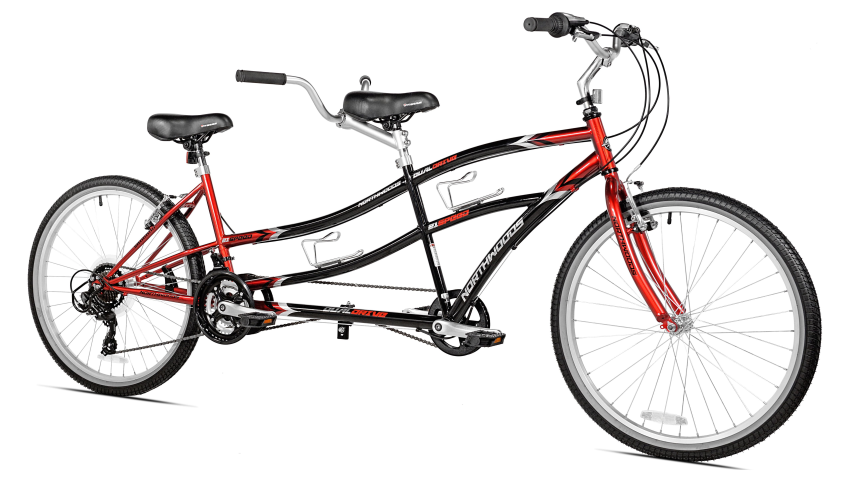
At first I saw God as my observer, my judge, keeping track of the things I did wrong, so as to know whether I merited heaven or hell when I die. He was out there sort of like a president. I recognized His picture when I saw it, but I really didn't know Him. But later on, when I met God, it seemed as though life was rather like a bike ride, but it was a tandem bike, and I noticed that God was in the back, helping me pedal.
I don't know when it was that He suggested that we change places, but life has not been the same since. When I had control, I knew the way. It was rather boring, predictable. It was the shortest distance between two points. But when He took the lead, He knew delightful long cuts up mountains and took me through rocky places at breakneck speeds. It was all I could do to hang on! Even though it looked like madness, He said, "𝑃𝑒𝑑𝑎𝑙."
I worried and was anxious and asked, "𝑊ℎ𝑒𝑟𝑒 𝑎𝑟𝑒 𝑦𝑜𝑢 𝑡𝑎𝑘𝑖𝑛𝑔 𝑚𝑒?" He laughed and didn't answer and I started to learn to trust. I forgot my boring life and entered into the adventure. And when I'd say, "𝐼'𝑚 𝑠𝑐𝑎𝑟𝑒𝑑," He'd lean back and touch my hand.
He took me to people with gifts that I needed; gifts of healing, acceptance and joy. They gave me these gifts to take on my journey . . . and we were off again. He said, "𝐺𝑖𝑣𝑒 𝑡ℎ𝑒 𝑔𝑖𝑓𝑡𝑠 𝑎𝑤𝑎𝑦; 𝑡ℎ𝑒𝑦'𝑟𝑒 𝑒𝑥𝑡𝑟𝑎 𝑏𝑎𝑔𝑔𝑎𝑔𝑒, 𝑡𝑜𝑜 𝑚𝑢𝑐ℎ 𝑤𝑒𝑖𝑔ℎ𝑡." So I did, to the people we met, and I found that in giving I received, and still our burden was light.
I did not trust Him, at first, in control of my life. I thought He'd wreck it; but He knows bike secrets - knows how to make it bend to take sharp corners, knows how to jump to clear high rocks, knows how to fly to shorten scary passages. And I am learning to pedal in the strangest places, and I'm beginning to enjoy the view and the cool breeze on my face with God as my delightful constant companion. And when I'm sure I just can't do anymore, He smiles and says, "𝐽𝑢𝑠𝑡 𝑃𝑒𝑑𝑎𝑙”.
One thing that I do is I wear a large wooden cross as seen in my profile picture. Many people give me the thumbs up and or they say the love it. Have only had a couple people show negative reactions. I just smile and move on.
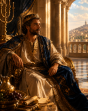
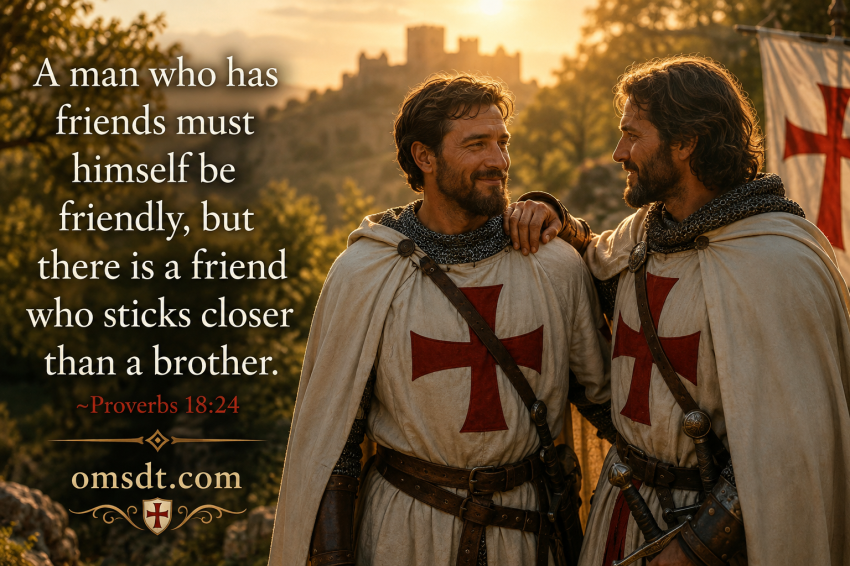
The saying “blood is thicker than water” originated as a way to prioritize the bonds of kinship over friendship. But Solomon, evidenced by Proverbs 18:24, might have begged to differ. And he might have been drawing on the experience of his own father, David.
The saying “blood is thicker than water” originated as a way to prioritize the bonds of kinship over friendship. But Solomon, evidenced by Proverbs 18:24, might have begged to differ. And he might have been drawing on the experience of his own father, David.
David was the youngest of eight brothers and was anointed by Samuel to succeed Saul as king of Israel (1 Samuel 16). But when David arrived at the camp of Israel’s army, his brothers treated him with disdain and ridicule (1 Samuel 17). Ironically, it was Saul’s own son Jonathan who became David’s best friend, protecting him from the attacks of Saul (1 Samuel 18). When Saul devised a plan to kill David, it was Jonathan who saved him. Jonathan’s words to David exemplify the words of a true friend: “Whatever you yourself desire, I will do it for you” (1 Samuel 20:4). David never heard similar words of loyalty from his own brothers. This experience may have inspired Solomon to write that there “is a friend who sticks closer than a brother.”
Solomon also suggested that to have such a friend, one must be such a friend